
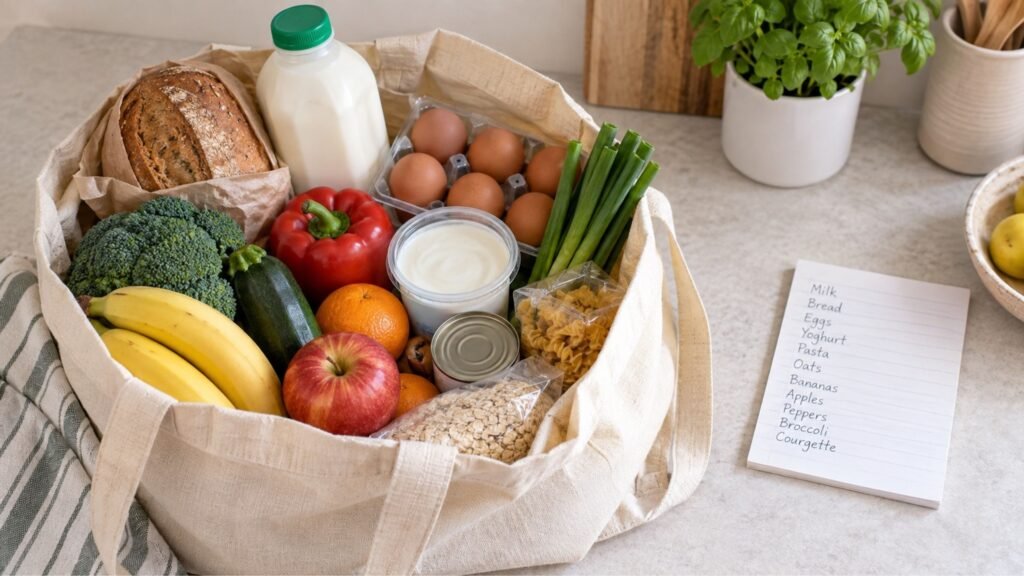
When you live alone, grocery shopping can be surprisingly difficult to get right.
Shop too often and it’s easy to pick up extra things you didn’t really need. Leave it too long and you can find yourself with an empty fridge, very little to make for dinner, and an expensive last-minute trip to the supermarket.
For most people living alone, one main grocery shop each week works well, with an occasional small top-up for fresh food if needed.
But there isn’t one perfect schedule. How often you need to shop depends on what you eat, how much fresh food you buy, your freezer space and how much you like to plan ahead.
Here’s a simple way to find a shopping routine that works for you.
Is Shopping Once a Week Best for One Person?
For many one-person households, a weekly grocery shop is a useful starting point.
Seven days is short enough to plan without having to predict what you’ll want to eat weeks in advance, but long enough to avoid repeatedly popping into the supermarket.
A weekly shop also makes it easier to:
- plan a handful of meals
- check what you already have before shopping
- use fresh ingredients before buying more
- keep an eye on your weekly food spending
- reduce impulse purchases
You don’t necessarily need enough fresh food to last every meal for seven days.
Your cupboard and freezer can take over towards the end of the week.
For example, you might use salad leaves, fresh vegetables and softer fruit earlier in the week, then rely more on frozen vegetables, eggs, pasta, rice or a freezer meal later on.
That can be much easier than trying to make every fresh ingredient last until your next shop.
A Simple Weekly Shopping Routine for One
A grocery routine doesn’t need to be complicated.
A simple version could look like this:
Before shopping: Check your fridge, freezer and cupboards.
Choose a few meals: Decide on three or four main meals rather than trying to plan something completely different every day.
Write your list: Buy the ingredients you’re missing, along with your usual breakfast, lunch and household staples.
Shop once: Do your main grocery shop for the week.
Use fresh foods first: Prioritise ingredients with shorter shelf lives during the first few days.
Use flexible foods later: Frozen vegetables, eggs, tinned foods and cupboard staples can fill any gaps towards the end of the week.
This gives you structure without needing a rigid seven-day meal plan.
If you’d like a little more help planning your week, my Meal Planning for One Person guide explains the simple approach I use for solo meal planning.
What About a Midweek Top-Up Shop?
There’s nothing wrong with doing a small top-up.
The important word is small.
You might run out of:
- milk
- bread
- bananas or other fruit
- salad
- yoghurt
- another fresh ingredient you regularly use
Buying one or two things midweek isn’t a sign that your meal planning has failed.
The problem comes when a £3 milk-and-bread trip repeatedly becomes another £15 or £20 grocery shop.
If that happens regularly, it can be useful to keep a short top-up list and only buy what’s on it.
You may also find that freezing bread, keeping frozen vegetables or having long-life milk available reduces the need for extra trips.
Is It Better to Shop Twice a Week When You Live Alone?
For some people, yes.
Two smaller shops can work particularly well if you:
- eat lots of fresh fruit and vegetables
- have very little fridge or freezer space
- walk to the supermarket and can’t carry a full week’s groceries
- don’t like deciding meals very far ahead
- regularly find fresh food going to waste
For example, you could shop on Monday for the first half of the week and again on Thursday for the second.
The downside is that every supermarket visit gives you another opportunity to spend money.
If you’re trying to reduce your grocery bill, one planned weekly shop may make spending easier to control.
The best approach is the one that helps you buy what you’ll actually eat.
Can One Person Shop Every Two Weeks?
It’s possible, particularly if you have a well-stocked freezer and cupboard.
A fortnightly shop tends to work better for foods such as:
- pasta and rice
- oats and cereal
- tins
- jars
- frozen vegetables
- frozen fruit
- meat or meat alternatives that can be frozen
- toiletries
- cleaning products
Fresh food is where it becomes more difficult.
Some vegetables, fruit and dairy products won’t comfortably last two weeks once opened.
One option is to do a larger grocery shop every fortnight and a very small fresh-food shop in between.
However, if fortnightly shopping leads to buying lots of food “just in case”, it may not actually save money.
Why Shopping Too Often Can Cost More
Little-and-often shopping can feel economical because each individual trip is relatively inexpensive.
But those trips add up.
You go in for bread and come home with bread, a snack, something that was on offer and an extra dinner because it looked nice.
None of those purchases seems particularly significant on its own.
Repeated several times during the week, however, they can quietly push your grocery spending upwards.
If this sounds familiar, you might find my guide to why your grocery bill is so high when you live alone helpful.
Reducing supermarket visits can be one simple way of putting a little more space between wanting something and buying it.
But Shopping Too Infrequently Can Cause Waste Too
There’s another side to this.
Trying to shop for several weeks at once can encourage overbuying.
It’s easy to think:
“I might need this.”
“I’d better get another one.”
“This is cheaper in the bigger pack.”
But when you’re feeding one person, bigger isn’t always better.
Food is only good value if you eventually eat it.
A slightly more expensive smaller pack can sometimes cost less overall than a large pack that partly ends up in the bin.
That’s one reason I prefer thinking in terms of what I’ll realistically use, rather than simply buying the lowest price per gram.
Use Your Freezer to Shop Less Often
Your freezer can make weekly grocery shopping much easier.
It gives you somewhere to keep:
- bread
- individual portions of meat or fish
- leftovers
- frozen vegetables
- cooked rice
- sauces
- batch-cooked meals
That means your fridge doesn’t have to provide seven days of meals by itself.
I particularly like having one or two easy meals frozen for the end of the week.
If plans change or you’ve eaten something you weren’t expecting to use, there’s still something available without needing another supermarket trip.
You can read more about this in How to Freeze Meals for One Person.
Keep a Few Cupboard Backup Meals
Your cupboard can do the same job.
You don’t need a huge pantry.
A few useful staples can turn an almost-empty fridge into dinner.
For example:
- pasta
- rice
- tinned tomatoes
- beans or lentils
- tuna
- noodles
- stock cubes
- oats
- herbs and spices
Combine those with frozen vegetables, eggs or something from the freezer and you have plenty of options.
Having backup food at home also makes it easier to skip an unnecessary top-up shop.
Keeping a few useful cupboard staples for one person can also help you stretch your weekly shop and avoid unnecessary top-up trips.
Pay Attention to Your Own Waste
One of the easiest ways to work out how often you should grocery shop is to look at what happens at the end of the week.
If you’re regularly throwing away fresh food, you may be buying too much at once.
If you’re constantly running out of basics after three or four days, you may need to adjust your quantities or keep a few more staples at home.
If you’re making several unplanned supermarket trips every week, your main shop may need a little more planning.
Your food waste can tell you quite a lot about whether your current shopping routine is working.
What I Recommend for Most One-Person Households
If you’re not sure where to start, try this:
One planned grocery shop each week + an optional very small fresh-food top-up.
Before the main shop:
- Check what you already have.
- Choose a few meals for the coming week.
- Identify ingredients that need using.
- Check your freezer.
- Write a shopping list.
Then shop from the list.
During the week, don’t worry if your plan changes. Move meals around, freeze something you won’t use, or substitute an ingredient you already have.
Meal planning for one works much better when there’s room for real life.
How Much Should You Buy?
This is where shopping for one becomes very personal.
Someone who eats breakfast, lunch and dinner at home every day will naturally need more groceries than someone who eats several meals at work or with family.
Your budget will make a difference too.
You can also read How Much Should One Person Spend on Groceries Each Week? If you’re trying to work out a realistic UK grocery budget.
The Bottom Line
For most people living alone, shopping once a week is a good starting point.
It gives you enough structure to plan ahead without requiring you to predict what you’ll want to eat several weeks from now.
A small top-up for genuinely fresh essentials is perfectly fine too.
The goal isn’t to find the “perfect” shopping schedule.
It’s to find a rhythm that helps you:
- have enough food at home
- avoid unnecessary supermarket trips
- spend within your budget
- use what you buy
- throw away less food
If your current routine already does those things, you probably don’t need to change it.
And if it doesn’t, try one planned weekly shop for a few weeks and see whether it makes feeding one person feel a little easier.
Frequently Asked Questions
For many people living alone, one main grocery shop each week works well. It gives you enough fresh food for the week while making it easier to plan meals, control spending and avoid buying too much.
Shopping once a week can make grocery spending easier to control because you’re making fewer trips to the supermarket. However, the amount you save will depend on what you buy and whether a weekly shop helps you avoid impulse purchases and food waste.
Weekly shopping is often easier when you live alone because you can buy smaller amounts of fresh food. Fortnightly shopping can also work if you use your freezer, keep useful cupboard staples and are happy to do an occasional fresh-food top-up.
Check your fridge, freezer and cupboards before shopping, plan a few meals rather than seven completely different dinners, and make a list of what you actually need. Buying smaller quantities can also be worthwhile if larger packs regularly go to waste.