
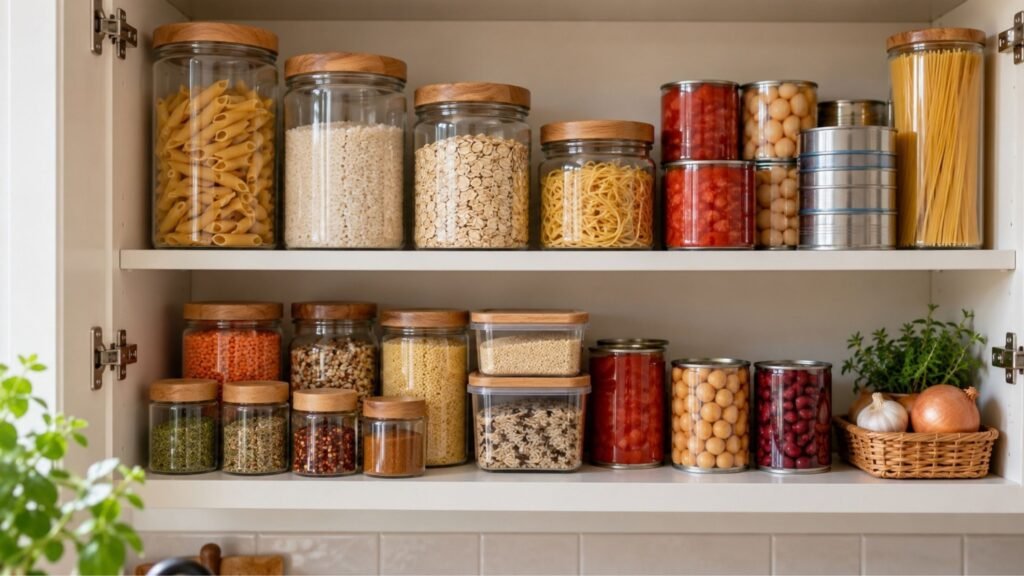
Keeping a few useful cupboard staples can make cooking for one much easier.
You don’t need shelves packed with tins, jars and ingredients you rarely use. In fact, when you live alone, buying too much “just in case” can leave you with a cupboard full of food but still no idea what to make for dinner.
A better approach is to keep a small collection of foods you genuinely use and can combine into several simple meals.
The right cupboard staples can help you stretch your weekly grocery shop, put together an easy meal when plans change and avoid an unnecessary trip to the supermarket.
Here are the staples that are most useful when you’re shopping and cooking for one.
What Makes a Good Cupboard Staple for One Person?
A useful cupboard staple doesn’t simply have a long shelf life.
Ideally, it should also be:
- something you actually enjoy eating
- useful in several different meals
- easy to portion for one
- affordable
- simple to combine with fresh or frozen ingredients
- unlikely to go to waste once opened
You don’t need every item on somebody else’s “essential pantry” list.
If you never eat lentils, don’t buy lentils because you think a well-stocked kitchen should contain them.
Your cupboard should reflect the way you eat.
1. Pasta
Pasta is one of the easiest staples to keep when you live alone.
It’s inexpensive, keeps for a long time, and you can cook exactly the amount you need.
Combine it with tinned tomatoes, frozen vegetables, pesto, cheese, tuna or leftover vegetables, and you have the basis of an easy meal.
You don’t need several different shapes either. One or two types you regularly use are plenty.
If you’re looking for inexpensive ways to use it, check out my Cheap Pasta Meals for One Person guide.
2. Rice
Rice is another versatile staple because it works with so many different ingredients.
You can use it for:
- curries
- chilli
- stir-fries
- rice bowls
- fried rice
- simple vegetable meals
It also works particularly well with freezer ingredients.
A portion of rice, some frozen vegetables and an egg can become a quick meal without needing to go shopping.
My Cheap Rice Meals for One Person guide has more ideas for turning basic rice into inexpensive solo meals.
3. Oats
Oats aren’t just useful for breakfast.
They’re inexpensive, easy to portion and generally have a good cupboard life.
You can use them for porridge, overnight oats, homemade flapjacks or as part of a crumble topping.
If you regularly eat breakfast at home, oats are one of those simple staples that can prevent you from running out of something to eat halfway through the week.
4. Tinned Tomatoes
A tin of tomatoes can start several different meals.
Use them for:
- pasta sauce
- chilli
- curry
- soup
- casseroles
- tomato-based rice dishes
They’re particularly useful because an unopened tin can sit in the cupboard until you actually need it.
For one person, though, think about what you’ll do with the whole tin once you open it.
If you only need half, refrigerate the remainder in a suitable container and plan to use it in another meal, or freeze it for later.
5. Beans and Pulses
Beans, chickpeas and lentils can be useful, inexpensive ingredients to keep around.
They can bulk out soups, curries, chilli, salads and rice dishes without requiring much preparation.
But this is a good example of why you don’t need to buy everything.
Choose one or two varieties you genuinely eat.
If kidney beans regularly go into your chilli, keep some.
If you love chickpeas, keep chickpeas.
There’s no benefit in stocking five different pulses if three of them sit untouched for a year.
6. Tinned Fish
If you eat fish, a couple of tins of tuna, sardines, mackerel or salmon can provide a useful backup protein.
Tuna in particular can work in:
- sandwiches
- jacket potatoes
- pasta
- salads
- rice dishes
Because tins don’t take up freezer or fridge space, they’re particularly useful if you have a small kitchen.
Again, buy what you actually eat rather than stocking several varieties simply for choice.
7. Noodles
Noodles are useful for the evenings when you want something quick.
Add an egg, frozen vegetables, leftover cooked meat or a simple sauce, and they can become a more substantial meal.
Keeping one packet or small multipack in the cupboard gives you another option without taking up much space.
8. Stock Cubes
Stock cubes are small, inexpensive and surprisingly useful.
They can add flavour to:
- soups
- casseroles
- rice
- sauces
- lentils
- simple vegetable dishes
There’s no need to keep every possible flavour.
One or two types that suit the meals you normally cook should be enough.
9. A Few Herbs and Spices
This is another area where cupboards can quickly become cluttered.
You don’t need 30 jars of herbs and spices to cook good food.
Start with the flavours you use most often.
Depending on what you like to cook, that might include:
- mixed herbs
- paprika
- curry powder
- chilli flakes
- garlic granules
- black pepper
Then add others when you have a reason to use them.
A small collection you use regularly is much more useful than a spice rack full of forgotten jars.
10. A Couple of Sauces or Condiments
A few sauces can turn basic ingredients into very different meals.
For example:
- soy sauce
- pesto
- mustard
- mayonnaise
- hot sauce
- Worcestershire sauce
But opened sauces often need refrigerating, and they don’t last forever.
Before buying another one, ask yourself whether you’ll realistically use it.
When you’re cooking for one, six half-used bottles in the fridge aren’t necessarily more useful than two favourites you use regularly.
11. Flour
Flour isn’t essential for everyone, but it’s useful if you regularly bake or make simple sauces.
A small bag may be enough for a one-person household.
There’s little advantage in buying a very large bag simply because the price per kilogram is lower if it takes years to use.
12. Something for an Emergency Meal
This might be the most useful cupboard staple of all.
Keep at least one meal that requires almost no thought.
That could be:
- a tin of soup and bread in the freezer
- baked beans and a jacket potato
- pasta and pesto
- noodles with an egg
- tinned fish and rice
- beans with toast
It doesn’t have to be exciting.
Its job is to give you an easy alternative to ordering food or making an unnecessary supermarket trip when you’re tired.
If those days are familiar, my Easy Meals for Low-Energy Days guide has more ideas.
Think in Meals, Not Ingredients
This is the most useful change you can make when stocking a cupboard for one.
Instead of asking:
“What should I keep in my cupboard?”
ask:
“What meals could I make from my cupboard?”
For example, keeping pasta, rice, tinned tomatoes, tuna and beans isn’t particularly useful if you don’t know what you’re going to do with them.
But perhaps your cupboard supports these five meals:
- Pasta with tomato sauce and frozen vegetables
- Tuna pasta
- Bean chilli with rice
- Egg fried rice with frozen vegetables
- Beans on toast
Suddenly those staples have a purpose.
You don’t need enough food for dozens of possible meals.
You need a few dependable options.
Combine Cupboard Staples With Your Freezer
Your cupboard becomes much more useful when it works alongside your freezer.
Imagine you have:
In the cupboard:
Pasta, rice, tinned tomatoes, tuna, beans and noodles.
In the freezer:
Bread, peas, mixed vegetables, individual portions of meat or fish and one cooked meal.
In the fridge:
Eggs, cheese and a couple of fresh vegetables.
That’s enough flexibility to make plenty of meals without keeping a huge amount of food at home.
If freezer space is limited, even a bag of frozen vegetables and half a loaf of bread can help.
You can find more ideas in How to Freeze Meals for One Person.
Don’t Turn Your Cupboard Into a Stockpile
Buying extra food can save money, especially when something you use regularly is on offer.
But there’s a difference between keeping a sensible spare and building a large stockpile.
When you live alone, you naturally use food more slowly.
Four jars of pasta sauce may look like a bargain, but if you use only one jar every couple of months, you’ve tied up money and cupboard space for little benefit.
Before buying multiples, ask:
- How often do I actually eat this?
- Do I already have one at home?
- Will I use all of it?
- Am I buying it because I need it or because it’s on offer?
The cheapest food is rarely the food you bought at the biggest discount.
It’s the food you actually eat.
Check Your Cupboard Before Grocery Shopping
Before doing your main grocery shop, take a quick look through your cupboard.
You don’t need a complicated inventory.
Just check:
- what you’re running low on
- what needs using
- whether you already own something on your list
- what meals you can make with what you have
This can prevent duplicate purchases and may even give you ideas for the coming week’s meals.
If you’re still working out the best shopping rhythm for you, read How Often Should One Person Go Grocery Shopping?
A regular shopping routine, combined with a few dependable cupboard staples, can make feeding one person much easier.
How Many Cupboard Staples Does One Person Need?
There isn’t a correct number.
Someone who cooks most meals from scratch may naturally keep more ingredients than someone who prefers very simple meals.
You might start with just:
- one pasta
- one rice
- oats
- tinned tomatoes
- one type of beans
- tinned fish
- noodles
- stock cubes
- a few favourite seasonings
- two or three sauces
Then build from there.
Don’t try to create the “perfect pantry” in one shopping trip.
Let it develop gradually based on what you actually cook.
A Simple Cupboard Checklist for One
If you’re starting from scratch, this is a sensible basic list:
Carbohydrates
- Pasta
- Rice
- Oats
- Noodles
Tinned foods
- Tomatoes
- Beans or pulses
- Tuna or another tinned fish
Flavour
- Stock cubes
- Mixed herbs
- One or two favourite spices
- Soy sauce or another favourite sauce
Useful extras
- Flour, if you use it
- Tea or coffee
- Cooking oil
- One easy backup meal
You don’t need to buy all of these if they don’t suit the way you eat.
Use the list as a starting point rather than a set of rules.
Keep It Small and Useful
The best cupboard for one person isn’t necessarily the fullest one.
It’s the one where you know what’s inside and can turn those ingredients into food you’ll actually eat.
Start with a few versatile staples.
Notice which ones you regularly replace and which ones sit untouched.
Over time, your cupboard will naturally become personalised to the way you cook.
And that’s much more useful than trying to follow somebody else’s idea of a perfectly stocked pantry.
Useful staples for one person can include pasta, rice, oats, tinned tomatoes, beans, tinned fish, noodles, stock cubes and a few favourite herbs, spices and sauces. The best choices are foods you regularly eat and can use in several different meals.
Start small rather than buying everything at once. Choose a few carbohydrates, tinned foods, seasonings and ingredients that can make several familiar meals. Add new staples gradually as you discover what you actually use.
Pasta, rice, beans, tinned fish, soup and noodles are useful options because they keep well and can be turned into simple meals. Combining cupboard foods with bread, vegetables or cooked meals from the freezer gives you even more options.
A small supply of useful staples can help you make meals from food you already have and reduce unnecessary supermarket trips. However, buying in large quantities isn’t automatically cheaper, particularly if food goes unused or eventually goes to waste.
A small cupboard, a few freezer basics and a simple weekly shopping routine can give you plenty of flexibility — without filling your home with food you don’t need.