
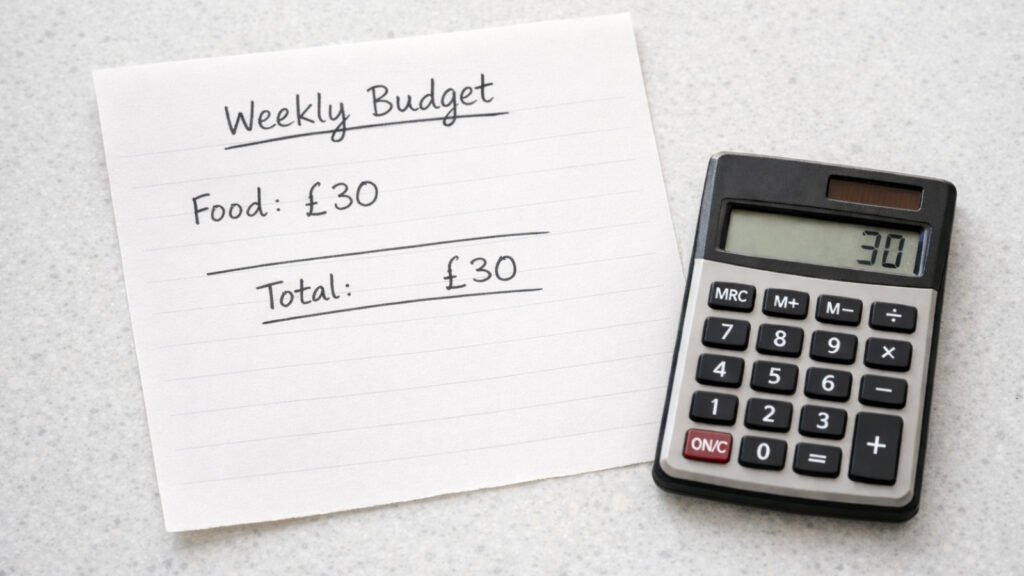
If you live alone, you may sometimes wonder whether you’re spending too much on groceries each week.
For one person in the UK, £25 – £45 per week can be a useful starting range for planning a grocery budget, depending on what you eat, where you shop and how often you cook at home.
That works out at approximately £108 – £195 per month.
This isn’t an official UK average or a target everyone needs to meet. Some people will spend less, while others will need or prefer to spend more.
Some weeks your grocery bill might feel perfectly reasonable. Other weeks, it can be surprisingly expensive.
With food prices changing and many budgeting guides aimed at families, it isn’t always easy to know what’s realistic when you’re shopping for one.
This guide looks at practical weekly grocery budgets for one person in the UK, what affects your spending and how to make your food budget work for you.
How Much Should One Person Budget for Groceries Each Week in the UK?
There isn’t one grocery budget that works for everyone living alone.
As a practical starting point, £25 – £45 per week can help you plan your food shopping, depending on your circumstances, appetite, dietary needs and where you shop.
Here’s how different weekly budgets might work:
- £25–£30 per week: A tighter budget, usually requiring careful planning and affordable ingredients.
- £30–£40 per week: More flexibility for everyday meals and a wider choice of ingredients.
- £40–£55 per week: Additional room for convenience foods, variety or particular dietary preferences.
- £55+ per week: A larger budget that may suit different needs, preferences or shopping habits.
These are illustrative budgeting ranges rather than official averages. Spending more doesn’t necessarily mean you’re wasting money, and spending less isn’t automatically better.
The aim is to find a budget that provides enough food, suits your circumstances and feels manageable over time.
What Does a Weekly Grocery Budget Look Like Per Month?
Weekly grocery costs can feel quite different when you look at how much they add up to over a full month.
Here’s what different weekly budgets work out to on average:
- £25 per week: Approximately £108 per month
- £30 per week: Approximately £130 per month
- £40 per week: Approximately £173 per month
- £50 per week: Approximately £217 per month
These figures are based on 52 weeks spread across 12 months, rather than assuming every month has exactly four weeks.
Even small changes to your weekly grocery spending can make a difference over time. However, the aim isn’t necessarily to spend less every week — it’s to find a realistic budget that works for you.
So, what would £25–£30 per week look like in real meals?
At the lower end of the range, meals usually focus on:
- Overlapping ingredients
- Frozen vegetables
- Eggs, lentils, chicken thighs
- Rice, pasta, potatoes
- Minimal branded items
- Cooking from scratch
Keeping to this budget takes planning and discipline, but it helps you get the most out of every shop.
If you’d like to see exactly how this works in practice, I’ve created a full £25 meal plan for one person using realistic UK supermarket prices.
If you have slightly more flexibility, the £30 meal plan for one person offers more variety while still keeping costs under control.
Why Grocery Costs Vary So Much
Numerous factors influence how much you spend each week.
1. Where You Shop
Smaller convenience stores are often more expensive.
Larger supermarkets and discount stores usually provide better value, especially for staples like rice, pasta, and frozen vegetables.
Doing your main shopping at one place and using a list can help you avoid buying things on impulse.
2. How Often You Eat Out
If you often get takeaway or ready meals, your grocery bill might seem low, but your overall food spending could be much higher.
Cooking even a few simple meals at home each week can greatly reduce overall costs.
If you’re unsure whether cooking actually saves money, I’ve broken down the real numbers in my guide to whether it’s cheaper to cook or buy ready meals in the UK.
3. Food Waste
Living alone can increase the likelihood of food waste.
Large pack sizes, multi-buy offers, and recipes designed for four people often lead to unused ingredients.
Planning meals with shared ingredients and freezing leftovers helps cut waste and saves money and time in the long run.
If grocery shopping for one seems overwhelming, my guide to grocery shopping for one person explains how to shop calmly, choose sensible quantities and reduce unnecessary spending.
4. Energy and Lifestyle
Some weeks are simply more tiring than others.
Convenience food can help on days when you’re low on energy, and that’s totally okay.
The goal isn’t to be perfect.
It’s about finding a balance.
How to Reduce Your Grocery Bill Without Restricting Yourself
Lowering your food spend doesn’t mean you have to eat poorly.
Often, it just means adding a bit of structure.
You might try:
- Planning 3–5 core meals per week
- Choosing ingredients that overlap
- Cooking two portions at once
- Freezing leftovers immediately
- Shopping once a week instead of making extra trips
If you’d like a calm, repeatable system for doing this consistently, my complete guide to meal planning for one person walks through the process step-by-step.
Choosing a budget that feels right starts with asking yourself a few questions.
A helpful way to think about it:
- Do you enjoy cooking most days?
- Do you value convenience?
- Do you often waste food?
- Do you prefer fresh or frozen vegetables?
There’s no single right number.
Find a number that suits your lifestyle.
For many solo households in the UK, £30 – £40 per week can be a useful starting point for planning a grocery budget, although individual needs and circumstances vary.
Quick Budget Comparison
| £25 | Basic meals using affordable ingredients and careful planning. |
| £30 | Everyday meals with a little more flexibility. |
| £40 | More choice, variety and some convenience foods. |
| £50+ | Greater flexibility for different preferences and dietary needs. |
Planning, not deprivation, is key to keeping your budget comfortable and manageable.
Once you understand your budget, it helps to see how it translates into actual meals. These meal plans for one person in the UK show how different budgets work in practice.
FAQ: How Much Should One Person Spend on Food in the UK?
Is £30 a week enough for one person in the UK?
£30 a week can be enough for some people, particularly when meals are planned around affordable ingredients and home cooking. However, it depends on individual needs, food prices and dietary preferences.
Is £25 realistic long-term?
It can be, but you need to plan carefully and keep food waste low.
Why do I spend more than £50 per week?
There are many possible reasons, including where you shop, dietary requirements, convenience foods and personal preferences. Spending more than £50 doesn’t automatically mean you’re overspending.
What’s the quickest way to reduce grocery spending?
Plan your meals before shopping and use ingredients that overlap. Even a little planning can help cut impulse buys.
If you want a simple structure to help you stay within a comfortable weekly range, my complete guide to meal planning for one person walks through a calm, practical system for organising meals, reducing waste, and shopping more intentionally.
Final Thoughts
Most people living alone in the UK can realistically spend between £25 and £45 per week on groceries.
Feeling in control is about having structure, not feeling restricted.
With gentle planning, thoughtful shopping, and flexible habits, your grocery budget can support your health, comfort, and peace of mind.
Over time, these small, thoughtful changes bring more calm and lasting benefits.