
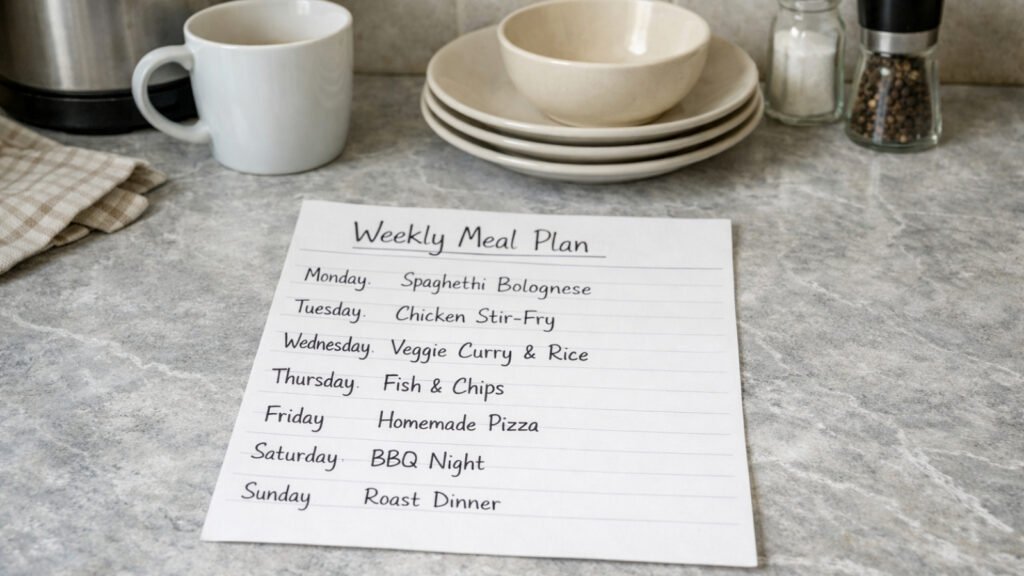
Living alone offers many benefits, but meal planning for one can be unexpectedly challenging. You might end up with excess leftovers, wasted groceries, or grow tired of daily meal decisions.
If you live alone, especially if retired or seeking simplicity, meal planning should ease your life, not add stress.
This guide will help you create simple, flexible meal plans that fit your life, save money, and reduce food waste. You do not need a complicated system. You just need a routine that works for you.
Kitchen Setup for One Person
When you’re cooking for one, you don’t need a fully stocked kitchen.
In fact, keeping things simple often makes cooking easier and less stressful.
A small set of reliable tools is usually more than enough to prepare most meals. This helps reduce clutter, saves money, and makes your kitchen easier to manage day-to-day.
If you’re just getting started, focus on the basics:
- A frying pan
- A small saucepan
- A good knife
- A chopping board
- A few simple utensils
That’s enough to cook a wide range of meals without overcomplicating things.
If you want a clearer breakdown of what’s worth having (and what you can skip), see my guide to essential kitchen equipment for one person.
Some people also find it helpful to use a slow cooker for low-effort meals, especially if they batch cook regularly. If you’re unsure whether it’s worth having one when cooking for one, this guide to using a slow cooker for one person breaks down the pros and cons to help you decide when it actually makes sense.
Why Meal Planning for One Is Different
Meal planning for one person is very different from planning for a family.
When you cook for yourself, you may notice:
- Most food packages are made for several people.
- Recipes often serve four or more.
- Leftovers can pile up quickly.
- Motivation to cook every day can change.
- Energy levels may vary.
Because of these challenges, many people who live alone feel discouraged about planning meals. The good news is that with a few simple changes, meal planning for one can be easy and enjoyable.
The Benefits of Simple Meal Planning
A simple meal-planning routine can improve daily life in many ways.
Planning meals for one helps you spend less on groceries, waste less food, feel less stressed about meals, eat more balanced meals, make fewer trips to the store, and gain more free time.
- You waste less food
- You feel less stressed about meals.
- You eat more balanced meals.
- You make fewer trips to the store.
- You gain more free time.
Most importantly, you will feel more in control and relaxed about your daily routine.
The Solo Food Budget Framework
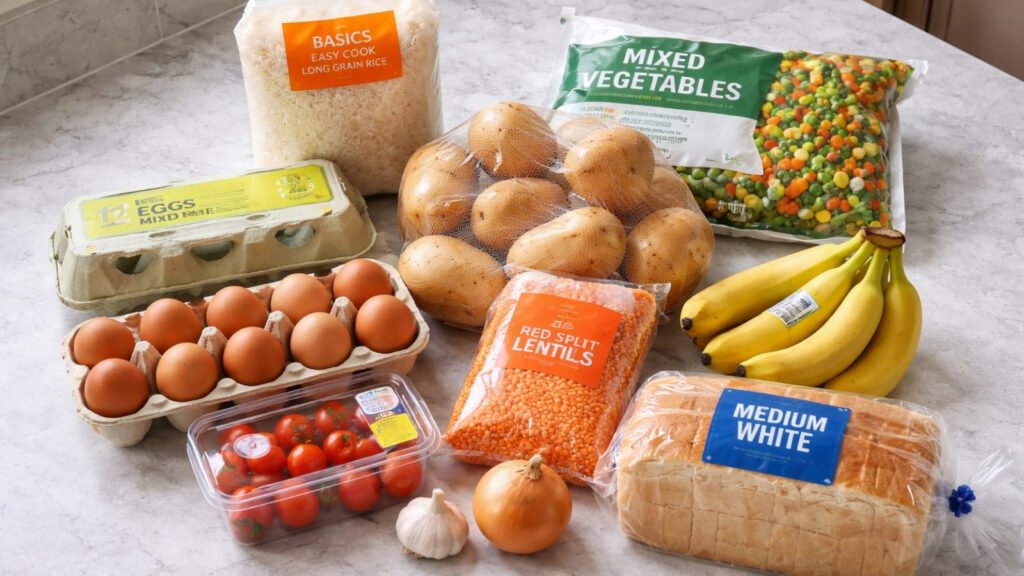
Before choosing meals, it helps to choose your budget.
Meal planning for one person in the UK becomes much easier when you know how much you’re working with each week. Without a clear weekly budget, spending can slowly drift — especially with top-up shops, convenience meals, and supermarket offers designed for larger households.
For most solo adults in the UK, a realistic weekly food budget usually falls somewhere between £25 and £45 per week, depending on lifestyle, appetite, and how often you cook from scratch.
Rather than aiming for perfection, it helps to choose a level that matches your current situation.
Level 1: £25 Per Week – Reset & Tight Control
A £25 weekly budget is structured and simple.
This level works well if you:
- Need to reduce spending quickly.
- You are recovering from grocery overspending.
- Prefer repetition and routine.
- Want minimal food waste
At this level, meals rely heavily on affordable staples such as rice, lentils, eggs, potatoes, and frozen vegetables. Ingredient variety is limited on purpose, which keeps costs predictable.
If this sounds like what you need right now, see the full £25 meal plan for one person (UK) for a clear weekly structure.
Level 2: £30 Per Week – Sustainable & Balanced
A £30 weekly budget offers slightly more flexibility.
This level allows:
- More protein variety
- Slightly more fresh produce
- More flavour rotation
- A bit more breathing room
It still relies on repetition, but it feels less restrictive in the long term.
If you want something affordable but easier to maintain week after week, explore the £30 meal plan for one person (UK).
Level 3: £40+ Per Week – Comfortable & Flexible
For some people, £40–£45 per week feels more realistic.
This level allows:
- Greater meal variety
- Occasional convenience items
- Less strict repetition
- More spontaneous choices
There is nothing wrong with this level if it fits your income and priorities. The goal is not to spend the least possible — it is to spend intentionally.
If you’re unsure what a realistic weekly food budget looks like, see my full guide on how much one person should spend on food in the UK. It breaks down typical spending ranges and explains what different budgets look like in practice.
Why Choosing a Level First Matters
Meal planning without a clear budget often leads to frustration.
When you choose a level:
- Your ingredient choices become clearer.
- Your shopping list becomes smaller.
- Your decisions become simpler.
- Overspending becomes easier to spot.
Instead of asking, “What should I cook?”
You begin asking, “What fits my structure this week?”
That shift makes meal planning calmer and more manageable.
How to Meal Plan for One: A Simple System
You do not have to plan every meal in detail. A simple approach works best.
Step 1: Choose 3 to 5 Main Meals
Rather than planning 21 meals each week, pick just three to five main meals. These can be dinners or main dishes that last for more than one day.
For example:
- Soup
- Casserole
- Roasted chicken and vegetables
- Pasta
- Slow cooker meals
You can often eat these meals more than once.
Step 2: Repeat Ingredients
Pick meals that use some of the same ingredients. This helps you waste less food and save money.
For example:
- One bag of carrots is used in soup and stir-fry.
- One package of chicken is used in two meals.
- One bunch of spinach is used in salads and pasta.
Using the same ingredients in different meals makes shopping easier.
Step 3: Plan for Leftovers
Leftovers can be helpful if you plan for them.
Try to:
- Cook once and eat twice.
- Freeze extra portions
- Schedule “leftover days”
This saves you time in the kitchen and helps keep food from spoiling.
Step 4: Write Your Plan Down
Writing down your plan makes it easier to remember your meals and reduces daily decision-making.
A simple printable planner can help keep things clear and easy.
The 5 Core Principles of Solo Meal Planning
Meal planning for one person in the UK becomes much easier when you understand the small principles behind it.
These simple principles make the system work in the long term.
1. Repetition Reduces Waste
When you cook for one, variety can quickly become expensive.
Buying five different vegetables or planning seven different dinners often leads to leftovers sitting in the fridge until they spoil.
Repeating meals is not a failure — it is a strategy.
Eating the same soup twice or rotating the same three dinners across the week dramatically reduces food waste and lowers your grocery bill without extra effort.
Repetition creates stability.
Storing food properly is one of the simplest ways to reduce waste and make cooking for one easier. With a few basic habits, you can keep your fridge and freezer organised and avoid food being forgotten. If you’d like a simple, practical approach, see my guide to storing food when you live alone.
Leftovers are one of the easiest ways to save money when you’re cooking for one — but only if you store them properly. If you want a simple system for keeping leftovers fresh and easy to use, see my guide to storing leftovers when you live alone.
2. Fewer Ingredients Mean Lower Costs
Supermarkets in the UK are designed around family-sized shopping.
The more different ingredients you buy, the more likely you are to waste food.
Limiting yourself to:
- 2–3 protein sources
- 2 carbohydrate bases
- 3–4 vegetables
keeps your shopping simple and predictable.
When ingredients overlap across meals, everything becomes easier — from cooking to storage to budgeting.
If you’re not sure what to actually buy each week, a simple, cheap grocery list for one person can make shopping much easier and help reduce waste.
3. The Freezer Is a Stability Tool
For one-person households, the freezer is not just storage — it is security.
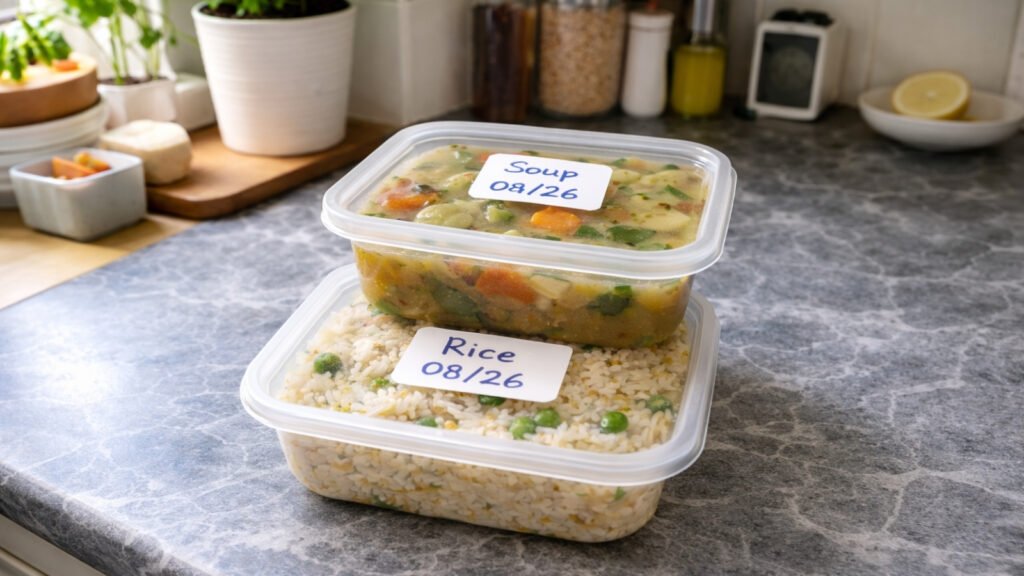
Freezing single portions allows you to:
- Avoid takeaway on low-energy days.
- Rotate meals without boredom.
- Prevent food waste
- Smooth out busy weeks.
Even freezing one or two portions per week creates flexibility.
A small, organised freezer system can completely change how manageable solo meal planning feels.
Storing meals properly makes a big difference when you’re cooking for one, especially if you’re batch cooking or trying to reduce waste. Using simple, stackable containers makes it easier to portion meals and keep your freezer organised. You can browse practical options on Amazon UK if you’re setting this up.
4. Planning Reduces Decision Fatigue
One of the hidden challenges of living alone is making every food decision yourself.
“What should I eat?” becomes a daily question.
Writing down your meals in advance removes that mental load.
Instead of deciding every evening, you simply follow your plan.
Less decision-making means less stress.
5. Budget Clarity Prevents Drift
Many people overspend on groceries without realising it.
Small purchases add up. Top-up shops creep in. Convenience items sneak into the basket.
Choosing a weekly budget — whether £25, £30, or more — creates a boundary.
When you know your number, it becomes easier to notice when spending starts to drift.
Clarity creates control.
Bringing It All Together
When these five principles work together:
- You waste less food
- You spend less money.
- You cook less often
- You feel less overwhelmed.
Meal planning for one person is straightforward with the right structure.
The key is having a structure.
Once the structure is in place, everything else becomes easier.
You can download my Weekly Meal Planner for One Person here.
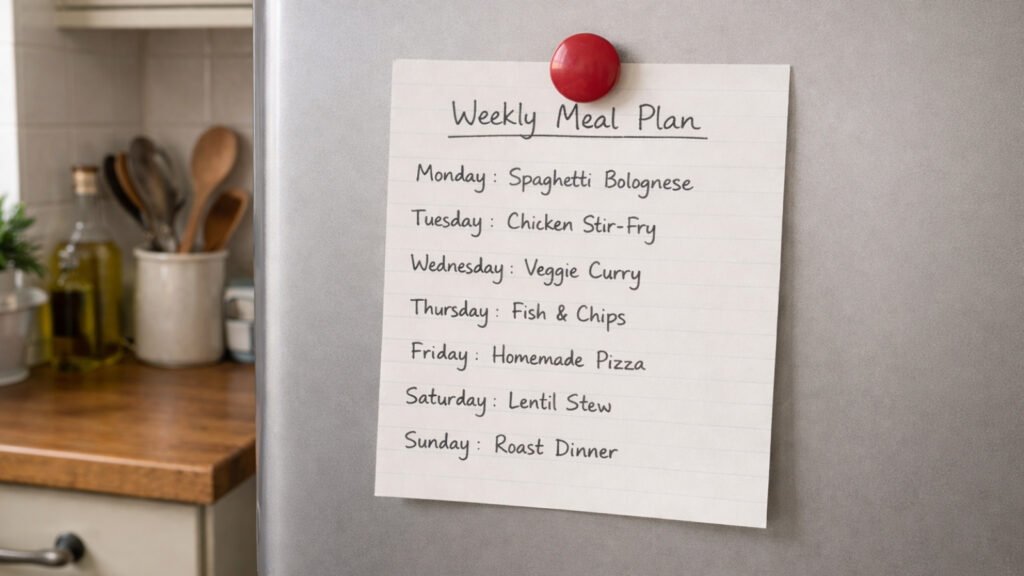
Weekly Meal Planning Example for One Person
Here is an example of a simple weekly meal plan:
| Monday | Chicken and vegetables |
| Tuesday | Leftovers |
| Wednesday | Vegetable soup |
| Thursday | Sandwich and salad |
| Friday | Pasta |
| Saturday | Freezer meal |
| Sunday | Eat out or simple meal |
Why This Weekly Structure Works
At first glance, a simple weekly plan may not look impressive.
It is not packed with new recipes.
It is not highly varied.
It is not complicated.
That is exactly why it works.
It Builds in Leftovers on Purpose
Instead of treating leftovers as an afterthought, this structure expects them.
Cooking once and eating twice reduces both effort and waste.
Leftover days give your fridge time to clear out, which prevents forgotten food from spoiling.
For one-person households, planned repetition is far more effective than daily variety.
It Reduces Daily Decision-Making
When meals are loosely assigned to each day, you remove the constant question:
“What should I eat tonight?”
That small mental relief matters.
Even knowing you have a “freezer meal” or “simple meal” day reduces stress and makes it easier to stick to your plan.
It Creates Flexibility Without Chaos
Notice that the example week includes:
- A leftover day
- A freezer meal
- A simple meal
- An optional eat-out or rest day
This prevents the plan from feeling rigid.
Instead of breaking the plan when life changes, you adjust within it.
Structure does not mean restriction.
It means stability.
If you’d prefer a gentler starting point, see Simple Weekly Meal Routine for One Person, which outlines a lighter rhythm for solo living without detailed budgeting layers. It’s ideal for lower-energy weeks when you want structure without pressure.
It Supports a Weekly Budget Naturally
When you repeat meals and plan leftovers, your grocery list becomes smaller.
Fewer ingredients.
Less waste.
Fewer top-up shops.
That is what makes budgets like £25 or £30 per week realistic for one person in the UK.
Without repetition, those budgets often feel impossible to achieve.
It Accounts for Energy Levels
Living alone means your energy can vary from day to day.
By building in:
- A freezer meal
- A simple meal
- A rest or eat-out day
You avoid the all-or-nothing cycle of cooking enthusiastically for three days, only to abandon the plan entirely.
This weekly rhythm makes the system sustainable in the long term.
If you’re unsure how often you actually need to cook, see How Many Meals Should One Person Cook Per Week? for a realistic breakdown.
If you’re looking for practical meal ideas that fit this structure, see easy dinners for one person for simple, low-effort options you can rotate through the week. These meals are designed to reduce waste, minimise washing up, and work realistically within a one-person household.
This post, Cheap Healthy Meals for One (UK), gives more ideas on healthy food variations.
The Real Goal
The goal of a weekly structure is not to create perfect meals.
It is to:
- Lower stress
- Reduce waste
- Simplify decisions
- Stabilise spending
When those elements are in place, meal planning stops feeling like a chore and starts feeling supportive.
And that is what makes it work.
Choosing the Right Weekly Food Budget for One Person
If you’re meal planning alone in the UK, your ideal weekly food budget will depend on how much flexibility you want.
If you need to reduce spending quickly or regain control after overspending, the £25 meal plan for one person (UK) is a tighter, more structured option built around simple, repeatable meals and minimal waste.
If you’d prefer slightly more variety and breathing room while still keeping costs sensible, the £30 meal plan for one person (UK) offers a more balanced weekly structure with greater protein and meal rotation.
Both plans are realistic. The difference is simply the level of flexibility you want within your grocery budget.
If your weekly spending has started creeping up, it may help to look at the small habits driving it. I’ve written a practical guide to cutting your grocery bill quickly in the UK, with simple steps tailored for one-person households.
Common Mistakes When Meal Planning for One Person
Meal planning for one person in the UK often fails for small, predictable reasons.
It is rarely about ability.
It is usually about structure.
Understanding these common mistakes makes it much easier to build a routine that actually lasts.
1. Planning Too Much Variety
When you live alone, it can feel like you should cook something different every day to avoid boredom.
In reality, too much variety increases:
- Food waste
- Grocery costs
- Decision fatigue
- Half-used ingredients
Supermarket pack sizes are rarely designed for one person. If you plan seven completely different dinners, you will almost always buy more ingredients than you can comfortably use.
Repetition is not boring — it is efficient.
2. Overbuying Fresh Produce
Fresh fruit and vegetables are healthy, but they spoil quickly when you cook for one.
Buying large bags of salad, herbs, or speciality vegetables often leads to throwing food away at the end of the week.
For many solo households in the UK, frozen vegetables are far more practical. They reduce waste, last longer, and allow you to use only what you need.
Meal planning should support your lifestyle — not create guilt over unused food.
3. Relying on “Top-Up” Shops
One of the biggest budget leaks for people living alone is the midweek top-up shop.
You pop in for milk.
You leave with snacks, extras, or convenience meals.
These small trips often undo careful planning.
Planning one main weekly shop — and building your meals around it — keeps spending stable and predictable.
If your grocery bill feels higher than expected, reviewing how much one person should spend on food in the UK can help you see where drift may be happening.
If you’re unsure whether fewer trips or bulk buying would save you more, I’ve compared both approaches in Is It Cheaper to Shop Weekly or Monthly for One Person? The guide breaks down real UK cost differences, food waste risks, and when each method makes sense for solo households.
4. Ignoring Leftovers
Leftovers are not an accident. They should be part of the plan.
Without scheduling leftover meals, they sit in the fridge until they are forgotten.
When you cook with intention — “cook once, eat twice” — leftovers become time-saving tools rather than waste.
Check out the post Meal Plan for One Without Wasting Food for more in-depth information on food wastage.
5. Comparing Your Shop to Families
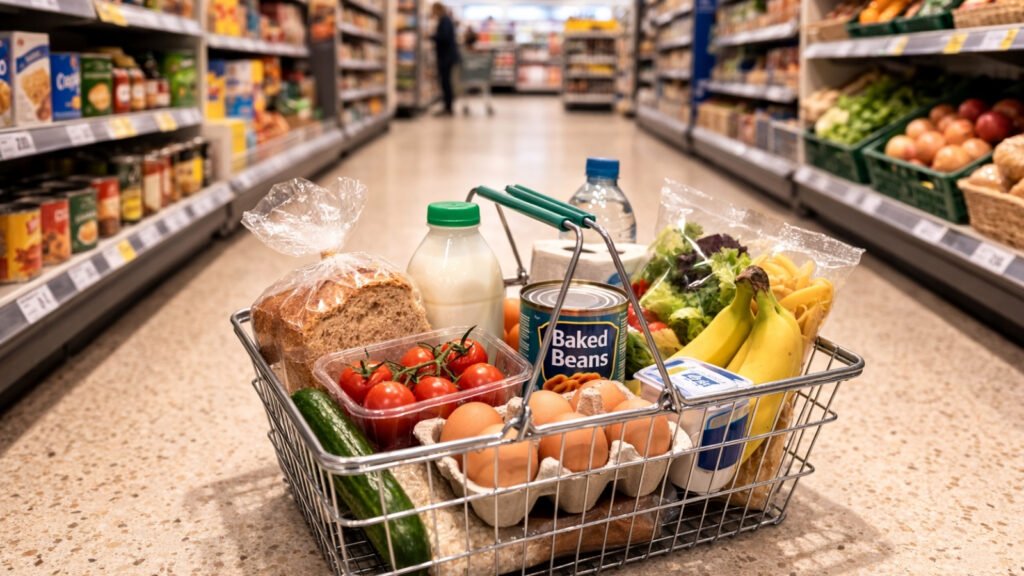
It is easy to feel discouraged when you see families buying in bulk and benefiting from multi-buy offers.
But most supermarket promotions are designed for households of three or four people.
Buying three-for-two deals when you live alone often increases waste rather than saving money.
Meal planning for one person requires a different mindset.
Smaller shops.
Smaller ingredient lists.
More repetition.
Less impulse.
6. Not Planning for Low-Energy Days
Many people abandon meal plans because they only plan for their “good days.”
When energy drops, cooking feels overwhelming, and takeaway becomes the default.
Building in:
- A freezer meal
- A simple meal
- A leftover day
prevents this cycle.
Your plan should expect normal energy fluctuations — not assume perfect motivation every day.
Freezing meals is one of the simplest ways to make cooking for one easier and reduce food waste. If you’re not sure how to do it properly, this guide to freezing meals for one person walks through a simple, practical approach.
The Pattern Behind These Mistakes
Most of these mistakes share one theme:
Trying to plan like a family when you are cooking for one.
Once you adjust your expectations and simplify your structure, meal planning becomes much easier — and far less stressful.
Smart Grocery Shopping for One Person
Smart grocery shopping can make meal planning much easier.
Here are helpful tips:
- Buy frozen vegetables and fruit.
- Choose loose produce when possible.
- Use store brands
- Divide large packages into smaller portions.
- Freeze meat and bread.
- Keep a small pantry list.
Planning your meals before you shop helps you avoid impulse buys and food waste.
Even the best meal plan can fall apart if your shopping habits don’t support it. Supermarkets are designed around bulk buying and family portions, which can make shopping for one surprisingly wasteful.
If you want a practical, step-by-step approach to buying only what you’ll actually use, read my full guide to grocery shopping for one person, where I break down how to shop calmly, reduce waste, and keep your weekly food bill under control.
Wasting food is a common problem for people who live alone.
To reduce waste:
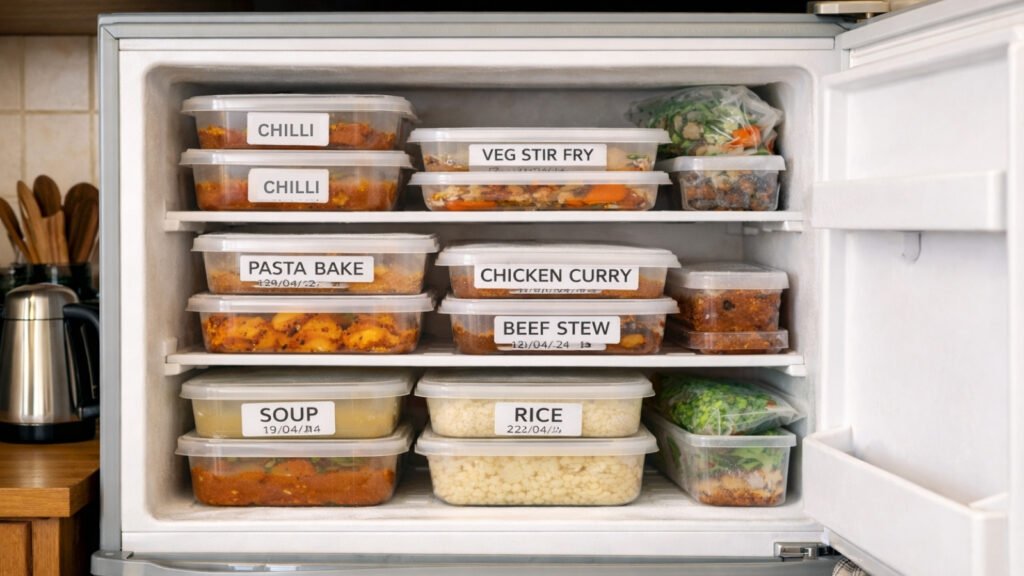
How to Avoid Food Waste When Cooking for One
- Freeze meals in single portions.
- Label containers with dates
- Use the “eat this first” sections in your fridge.
- Plan leftover days
- Turn leftovers into new meals.
Small habits can make a big difference over time.
Meal planning for one person, having the right storage makes everything easier. Choosing single-serve freezer containers helps you portion meals properly, reduce waste, and keep your freezer organised. I’ve put together a full guide to the best freezer containers for one person to help you pick the right options.
If you’re wondering whether cooking actually saves money compared to ready meals, I’ve broken down the real numbers in my detailed UK cost comparison on whether it’s cheaper to cook or buy ready meals. It’s especially helpful if you’re living alone and trying to reduce food waste.
Special Tips for Retirees and Low-Energy Days
Some days you might not feel like cooking, and that is perfectly normal.
Here are some gentle tips:
- Keep easy meals in the freezer.
- Use slow cookers or one-pot meals.
- Choose pre-cut vegetables when needed.
- Sit while preparing food.
- Plan simple meals on tired days.
- Use large-print planners for clarity.
Your meal plan should help you, not wear you out.
You may find this post on easy meals for low-energy days helpful.
Tools That Support the Solo Meal Planning System
Meal planning for one person in the UK does not require complex apps or rigid routines.
But having the right structure in place makes everything easier.
If you find yourself understanding the system but struggling to apply it consistently, these tools are designed to support the framework you’ve just read.
The Weekly Meal Planner for One Person
The weekly planner supports Step 4: Write Your Plan Down.
Writing your meals down reduces daily decision-making and builds routine. Many people find that physically seeing their week laid out makes them feel calmer and more organised.
Printable planners are especially helpful because they:
- They are easy to read.
- Can be kept in the fridge
- Do not require technology.
- Help reinforce consistent habits.
The goal is not to create a rigid schedule.
It is to reduce mental clutter.
If you prefer something clear and simple, you can download the Weekly Meal Planner for One Person here.
2. The Solo Freezer Blueprint
Earlier in this guide, we discussed why the freezer serves as a stabiliser for one-person households.
The Solo Freezer Blueprint expands on that principle.
It shows you how to:
- Build a small rotation of freezer meals.
- Freeze single portions correctly.
- Prevent freezer clutter
- Avoid boredom without overspending.
The blueprint is not about filling your freezer with dozens of meals.
It is about creating 6–10 reliable options that support your weekly plan and protect your budget during busy or low-energy weeks.
When your freezer supports your structure, your takeaway spending naturally drops.
How These Tools Fit Together
The system works like this:
- Choose your weekly budget (£25, £30, or more).
- Select 3–5 core meals.
- Write them down using a simple planner.
- Freeze 1–2 portions each week.
- Rotate meals gradually.
The planner gives clarity.
The freezer gives flexibility.
The budget gives structure.
Together, they reduce stress and make solo meal planning sustainable in the long term.
Frequently Asked Questions
How many meals should I plan for one person?
Most people do well planning three to five main meals per week and using leftovers for the rest.
Is meal planning worth it if I live alone?
Yes. Meal planning saves time, reduces waste, and makes daily life easier.
How do seniors plan meals easily?
Simple routines, repeated meals, and printable planners work very well for seniors.
What if I do not enjoy cooking?
Focus on easy meals, frozen foods, and ready-made options. Planning is about making life easier, not harder.
If you’re feeling overwhelmed and want a simple starting point, read my guide on how to meal plan for one person without the stress for a practical, beginner-friendly approach.
If your spending still feels higher than expected, small habits like top-up shops or too much variety may be the cause. I explain this more clearly in Why Is My Grocery Bill So High? (Living Alone UK), where I break down the most common reasons solo households overspend—and how to address them calmly.
Final Thoughts: Keep It Structured, Keep It Simple
Meal planning for one person in the UK does not require complicated recipes or extreme budgeting.
It requires structure.
Choose a realistic weekly budget.
Limit your ingredient list.
Plan 3–5 core meals.
Repeat them.
Freeze one or two portions.
Shop once.
When you simplify your choices, waste reduces and spending stabilises.
You do not need to cook differently every day.
You do not need to buy in bulk.
You do not need to make it perfect.
You need a routine that supports your life.
Start with a clear weekly budget.
Build a small rotation of reliable meals.
Write your plan down.
Let the freezer support you when energy dips.
Everything else becomes easier once those foundations are in place.