
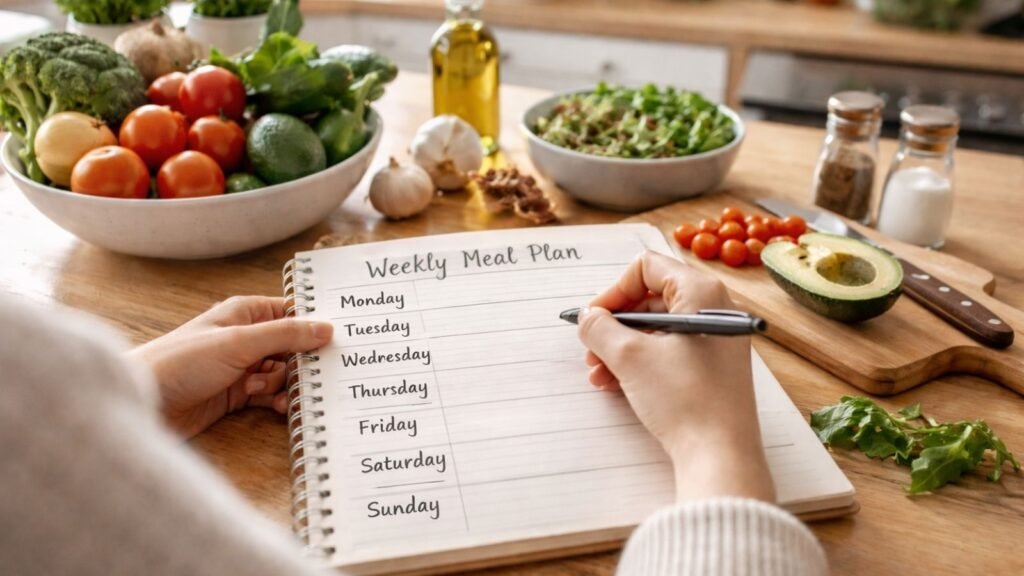
Cooking for one person often creates an unexpected challenge: food waste.
Many ingredients are sold in family-sized packs, and most recipes are written to serve several people. As a result, it’s easy to end up with half-used vegetables in the fridge or leftovers that never get eaten.
Over time, this waste can quietly increase grocery costs and make cooking feel frustrating.
Meal planning for one person is one of the most effective ways to reduce food waste when living alone. By planning meals around ingredients, using leftovers intentionally, and freezing extra portions when needed, it becomes much easier to use food efficiently.
How to Cook for One Without Wasting Food
Cooking for one becomes much easier when a few simple habits work together:
- Plan a small number of meals
- Repeat ingredients across the week
- Use leftovers intentionally
- Freeze extra portions
- Keep meals simple
This creates a system that reduces waste without needing strict rules or complicated planning.
If you’re building a simple cooking system for living alone, this guide explains how to plan meals for one person while minimising food waste.
You may also find it helpful to start with the broader system explained in the Meal Planning for One Person (UK Guide).
Why Food Waste Happens When You Live Alone
Food waste is common in single-person households, and it usually happens for a few predictable reasons.
Understanding these patterns makes it easier to avoid them.
If you want a broader look at reducing waste in everyday life, see how to stop wasting food when you live alone.
Supermarket pack sizes are too large.
Many foods are sold in quantities that naturally produce multiple meals. For example:
- bags of vegetables
- packs of chicken breasts
- bunches of herbs
- large tubs of yoghurt
When these ingredients are bought for just one recipe, the extra food may be forgotten before it can be used.
Planning meals that reuse ingredients across several dishes can prevent this problem.
Recipes are designed for several people.
Most recipes online are written for two to four servings. Cooking them exactly as written often produces more food than one person can eat immediately.
Without a plan for leftovers, this can lead to repetitive meals or uneaten portions being thrown away.
Learning how to use leftovers intentionally is one of the most useful skills for solo cooking.
Ingredients are only used once
Sometimes people buy ingredients specifically for one meal. When those ingredients are not used again later in the week, they can spoil before being finished.
A better approach is to build several meals around the same core ingredients.
Plan Meals Around Ingredients, Not Recipes
One of the easiest ways to reduce food waste is to shift how meals are planned.
Instead of choosing completely different recipes for each day, it can be more practical to start with a few key ingredients and plan several meals that use them.
For example, a pack of chicken breast could be used in multiple ways during the week:
- chicken stir fry
- chicken pasta
- chicken wraps or sandwiches
Similarly, vegetables such as peppers and onions can appear in several meals rather than being used once and forgotten.
Planning meals this way helps ingredients stretch further and makes grocery shopping more efficient.
Choose Meals That Work Well as Leftovers
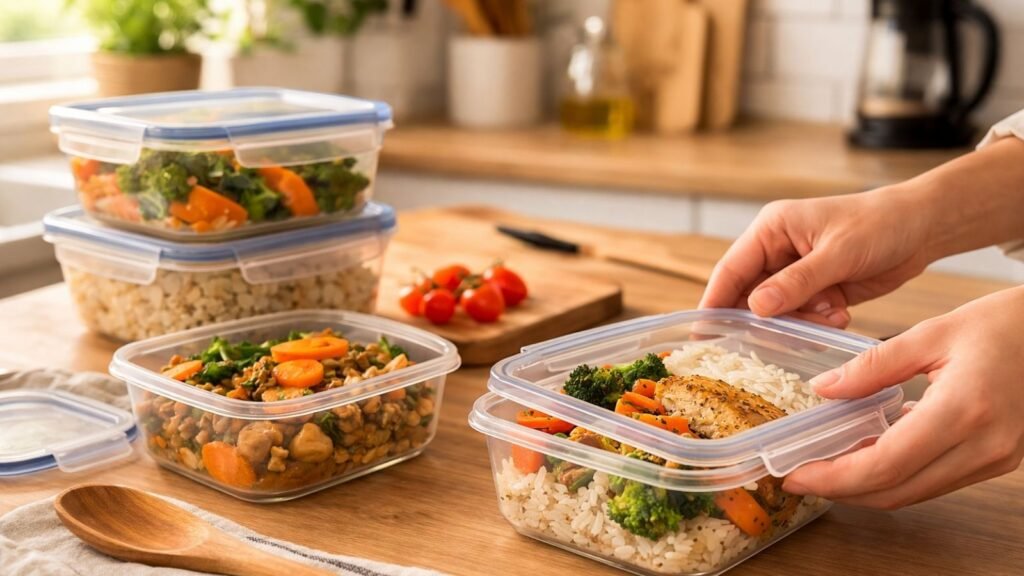
Some meals naturally produce extra portions and reheat well later. These types of meals are particularly useful when cooking for one person.
Examples include:
- soups
- stews
- curries
- pasta sauces
- chilli
When a meal yields two or three servings, one portion can be eaten immediately and the other saved for the next day.
These meals often taste just as good when reheated and require very little additional cooking.
Use the Freezer to Prevent Waste
Freezing extra portions is one of the most effective ways to prevent food waste when living alone.
Instead of eating the same meal several days in a row, an extra portion can be frozen and enjoyed later in the week or even the following month.
A simple system that many solo households use is:
Cook a meal → eat two portions → freeze one portion.
Over time, this gradually creates a small rotation of freezer meals that can be used when cooking feels inconvenient.
Meals such as soups, stews, curries, and pasta sauces freeze particularly well.
If you’re not sure how to freeze meals properly, see how to freeze meals for one person.
Using the right containers can make storing leftovers and freezing portions much easier. You can browse practical options on Amazon UK if you’re setting things up.
Keep Your Weekly Meal Plan Simple
Many people assume that meal planning requires organising a completely different meal for every day of the week.
When cooking for one person, this often creates unnecessary work and increases the risk of food waste.
Instead, many solo households find it easier to cook three or four meals during the week and reuse leftovers for additional meals.
If you are unsure how often you really need to cook, see How Many Meals Should One Person Cook Per Week, which explains a realistic cooking rhythm for people living alone.
Planning fewer meals often makes the entire process easier.
Build a Flexible Weekly Meal Plan
A simple weekly structure can help ingredients get used efficiently.
For example, a week might look like this:
Monday – chicken stir fry
Tuesday – stir fry wraps
Wednesday – tomato pasta
Thursday – pasta leftovers
Friday – vegetable tray bake
Weekend – simple meal or freezer meal
In this example, only three meals are cooked from scratch during the week, but the ingredients are used in several ways.
This approach reduces food waste while still providing variety.
Check Your Fridge Before Shopping
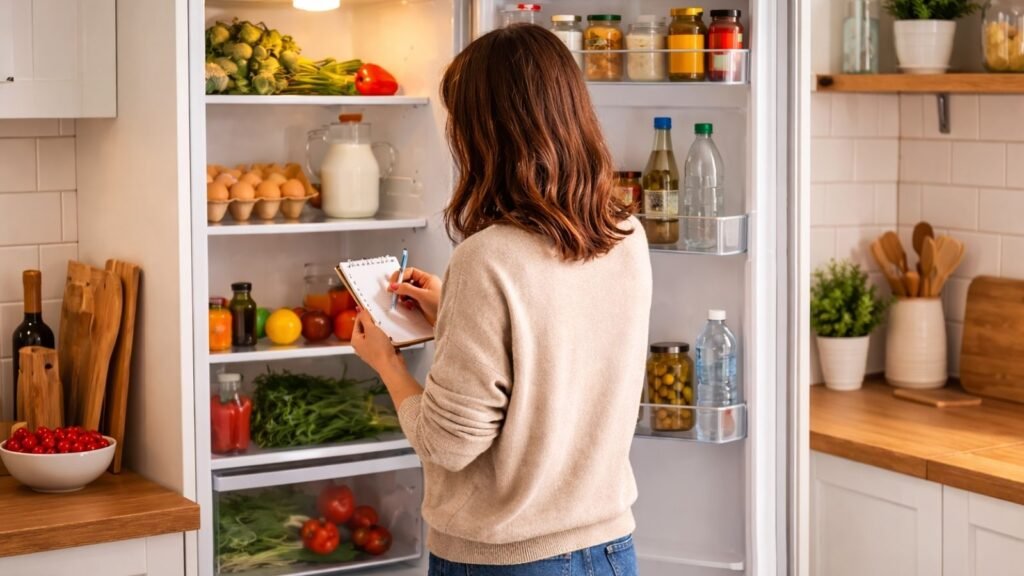
One simple habit can significantly reduce food waste: checking what you already have before going to the supermarket.
It is easy to forget about ingredients that are already in the fridge or cupboard. Planning meals around those ingredients first ensures that food is used before it expires.
For example, if vegetables need to be used soon, they could be used in a stir-fry, soup, or pasta dish.
Shopping with a simple plan also helps prevent impulse purchases that might go unused.
If you’re unsure what to buy, a simple, cheap grocery list for one person can help you plan more efficiently.
Store Food in Ways That Extend Its Life
Small storage habits can also make a big difference in reducing waste.
For example:
- store fresh herbs in water to keep them longer
- keep vegetables in appropriate fridge drawers
- freeze bread if it will not be used quickly
- use airtight containers for leftovers
These simple habits can extend the life of many ingredients and reduce the likelihood that food will spoil before it can be used.
If you want a full system, see how to store food when you live alone.
Reducing Food Waste Also Reduces Your Grocery Bill
Food waste and grocery spending are closely connected.
When ingredients are used efficiently, fewer items need to be replaced during the week. Over time this can make grocery costs more predictable and easier to manage.
Many people find that simply planning meals around ingredients and leftovers significantly reduces their food spending.
If your grocery costs feel higher than expected, you may also find How to Cut Your Grocery Bill Quickly helpful.
Meal Planning Makes Cooking for One Much Easier
Food waste is a common challenge for people living alone, but a few simple planning habits can make a big difference.
Planning meals around ingredients, using leftovers intentionally, and freezing extra portions when necessary helps ensure that food is used efficiently.
Over time, these habits make cooking easier, reduce grocery spending, and help create a simple routine that works well for solo households.
If you want to build a full system around this approach, the complete guide is explained in the Meal Planning for One Person (UK Guide).