
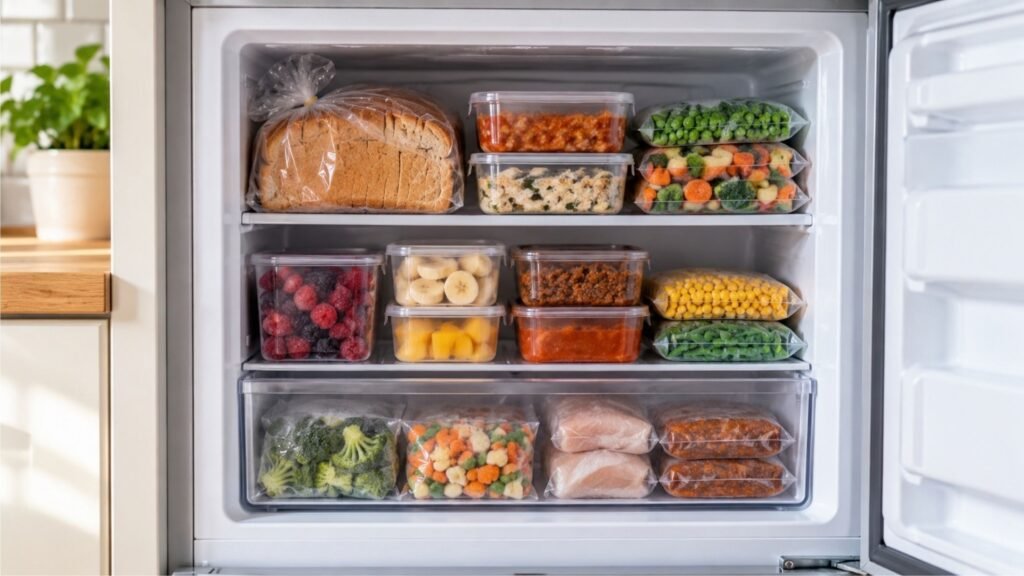
When you live alone, your freezer can be one of the most useful parts of your kitchen.
It gives you somewhere to keep food you won’t finish quickly, makes it easier to buy sensible amounts without worrying about everything going off, and gives you a backup when you don’t feel like cooking.
But a useful freezer doesn’t need to be packed full.
In fact, filling it with food you’ve forgotten about isn’t particularly helpful.
The aim is to keep a small selection of foods you use regularly — ingredients that make everyday meals easier and a few options for days when plans change.
Here are some of the foods that are most useful to keep in the freezer when you’re cooking for one.
1. Bread
Bread is one of the easiest foods to waste when you live alone.
Unless you eat it every day, it can be hard to get through a whole loaf before it goes stale or mouldy.
Freezing some of the loaf solves that problem.
You can take out individual slices as you need them and toast them straight from frozen, making it easy to keep bread available without feeling that you need to eat it quickly.
This is particularly useful for toast, sandwiches, beans on toast or alongside soup.
2. Frozen Vegetables
Frozen vegetables are incredibly useful for one-person households because you can use exactly the amount you need.
Peas, sweetcorn, spinach, broccoli and mixed vegetables can all help turn basic cupboard ingredients into a proper meal.
They’re useful for:
- pasta
- rice dishes
- stir-fries
- curries
- soups
- omelettes
- side dishes
There’s also no pressure to finish a whole bag within a few days.
For someone cooking for one, that flexibility can be more valuable than having several different fresh vegetables in the fridge at once.
3. Frozen Fruit
Frozen fruit can be handy if you enjoy smoothies, porridge or yoghurt but struggle to finish fresh fruit before it spoils.
Berries are particularly easy to portion.
Rather than buying lots of different frozen fruits, start with one you know you’ll use.
A freezer doesn’t become more useful simply because it contains more choice.
4. Individual Portions of Meat or Fish
If you eat meat or fish, freezing it in individual portions makes cooking for one much easier.
Instead of freezing a whole pack together, separate it before freezing where appropriate.
That way, you can take out one chicken breast, one portion of mince, or one fish fillet without defrosting more than you intend to eat.
This is especially helpful when larger supermarket packs are more practical to buy but contain several portions.
Always follow appropriate storage, defrosting and cooking guidance for the food you’re using.
5. One or Two Ready-to-Go Meals
A freezer for one doesn’t need to contain weeks of batch-cooked dinners.
But having one or two complete meals ready to go can be incredibly useful.
Perhaps it’s:
- a portion of chilli
- curry
- pasta sauce
- casserole
- soup
- cottage pie
These are the meals for evenings when you’re tired, plans have changed, or you don’t want to cook.
If you’d like more ideas specifically for meals you can prepare and freeze, see The Best Freezer Meals for One Person.
6. Leftovers You Actually Want to Eat Again
Not every leftover needs to be frozen.
Sometimes we freeze food because we feel guilty about throwing it away, only to throw it away six months later instead.
Before freezing leftovers, ask yourself:
“Will I genuinely want to eat this again?”
If the answer is yes, portion it appropriately, label it and freeze it.
If the answer is no, freezing it doesn’t really solve the problem.
This small habit can stop your freezer gradually filling with mystery containers.
7. Cooked Sauces
Sauces are particularly useful to freeze in small portions.
A tomato-based pasta sauce, curry sauce or homemade cooking sauce can turn simple cupboard ingredients into a quick dinner.
For example:
Frozen tomato sauce + pasta + frozen vegetables
can become dinner without needing to buy anything fresh.
Smaller containers can work well here because you don’t necessarily need a full meal-sized portion.
8. Grated Cheese
Cheese can sometimes be difficult to finish quickly when you’re the only person eating it.
Depending on the type and how you intend to use it, grated cheese can be useful to keep frozen for cooked dishes.
You can then use small amounts for pasta, baked potatoes, sauces or other hot meals.
Texture can change after freezing, so it’s generally more useful for cooking than for something like a cheese sandwich.
9. Wraps or Pitta Breads
Bread isn’t the only bakery product worth freezing.
Wraps and pitta breads can also be useful because you can remove them individually.
They give you another quick option for:
- simple lunches
- homemade pizzas
- wraps
- filled pittas
- using leftovers
If you don’t eat them frequently, freezing them can be much more practical than trying to finish a whole packet within a few days.
10. A Portion or Two of Cooked Rice
Cooked rice can be frozen for later, provided you cool it, store it, defrost it, and reheat it safely.
Small portions can be particularly handy for quick meals.
Combine rice with frozen vegetables, an egg or another protein, and you’ve got the basis of an easy dinner.
If you regularly cook rice, making a little extra occasionally can give you a useful future meal without turning it into a major batch-cooking session.
For inexpensive ideas, see Cheap Rice Meals for One Person.
11. Soup
Soup is one of the easiest meals to portion for one.
If you make a pan containing several servings, freeze the extras individually rather than eating the same soup for four days.
A frozen portion of soup plus some bread from the freezer makes a complete, easy lunch with very little effort.
12. Something for a Low-Energy Day
I’d deliberately reserve a little freezer space for food that requires almost no effort.
This doesn’t have to be homemade.
The important thing is that you’ll actually eat it when cooking feels like too much.
It could be:
- a frozen homemade meal
- a simple shop-bought frozen meal
- fish fillets
- veggie burgers
- a portion of soup
- another easy favourite
Your freezer isn’t a test of how organised or accomplished you are at cooking.
It’s there to make feeding yourself easier.
My Easy Meals for Low-Energy Days guide has more ideas for creating that kind of backup.
Don’t Fill Every Inch of Your Freezer
It can be tempting to think a full freezer is an efficient freezer.
For one person, leaving some room is often more useful.
Free space gives you somewhere to put:
- unexpected leftovers
- half a loaf of bread
- reduced food you’ve bought to use later
- an extra portion from dinner
- something you’ve opened but won’t finish
If every drawer is already packed, freezing food stops being a flexible solution.
You don’t need an enormous freezer stockpile.
You need usable space.
Think in Meals, Not Just Frozen Food
Just as with your cupboard, it helps to think about what your freezer can actually make.
Suppose you have:
Freezer
- bread
- mixed vegetables
- peas
- one fish fillet
- two portions of chilli
- grated cheese
Cupboard
- pasta
- rice
- tinned tomatoes
- beans
- tuna
Fridge
- eggs
- milk
- a couple of fresh vegetables
That relatively small amount of food can produce plenty of different meals.
Your freezer doesn’t need to contain everything.
It just needs to work with the food you keep elsewhere.
For ideas about what to keep alongside your freezer foods, see Best Cupboard Staples for One Person.
Avoid the “Freezer Graveyard”
Most of us have probably discovered something at the back of the freezer and wondered:
“How long has that been in there?”
The easiest way to avoid this is to keep the system simple.
Try to:
- label homemade meals
- include the date where useful
- keep similar foods together
- put older food where you can see it
- check the freezer before grocery shopping
You don’t necessarily need a detailed spreadsheet or inventory.
For a small one-person freezer, simply knowing roughly what’s inside may be enough.
If freezer organisation is becoming difficult, How to Freeze Meals for One Person goes into more detail about portions, storage and keeping frozen food manageable.
Buy for Your Freezer, Not Someone Else’s
Freezer advice often assumes you have lots of space.
You may not.
If you have a small freezer compartment rather than several drawers, prioritise foods that give you the most flexibility.
For example:
- bread
- frozen vegetables
- one or two proteins
- one backup meal
may be more useful than filling most of the available space with batch-cooked meals.
Equally, if you have a larger freezer and enjoy batch cooking, keeping several prepared meals may suit you perfectly.
There isn’t one correct freezer setup for someone who lives alone.
Check Your Freezer Before You Shop
A quick freezer check before grocery shopping can save both money and space.
You might discover that you already have:
- a portion of chicken
- half a loaf
- vegetables
- a frozen meal
You can add those foods to next week’s meal plan before you buy anything else.
This works particularly well alongside a regular shopping routine.
If you’re trying to find the right schedule, see How Often Should One Person Go Grocery Shopping?
A Simple Freezer List for One Person
If you’re starting with an almost empty freezer, don’t feel you need to fill it immediately.
A useful basic freezer might contain:
Everyday basics
- Bread
- Frozen mixed vegetables
- Peas or spinach
- Frozen fruit, if you use it
Protein
- One or two individually portioned proteins you regularly eat.
Easy meals
- One or two complete meals
- Soup or a portion of sauce
Useful extras
- Grated cheese
- Wraps or pittas
- A portion of cooked rice
You don’t need all of these.
Choose foods that fit the meals you genuinely eat.
The Best Freezer Is One You Actually Use
A good freezer for one person isn’t the one containing the most food.
It’s the one that makes everyday life easier.
Keep foods you regularly reach for, portion things so you can remove only what you need, and leave enough space for unexpected leftovers.
Combined with a few useful cupboard staples and a simple weekly grocery routine, even a small freezer can give you plenty of flexibility.
You don’t need to prepare months of food in advance.
Frequently Asked Questions
Useful freezer foods for one person include bread, frozen vegetables, individual portions of protein and one or two easy meals. The best choices are foods you regularly eat and can remove in small amounts as needed.
Frozen vegetables, bread, cooked sauces, soup and individually portioned proteins can all make quick meals easier. Keeping one or two complete meals ready to heat can also help on busy or low-energy days.
Start with a few versatile basics rather than trying to fill the freezer. Bread, vegetables, a couple of proteins and one or two prepared meals can provide plenty of flexibility. Add other foods gradually, based on what you actually use.
A freezer can be particularly useful for one-person households because it lets you store individual portions, save leftovers and keep food for longer. It can also make it easier to buy food without needing to finish everything within a few days.
Sometimes half a loaf of bread, a bag of frozen vegetables and one easy dinner waiting for you are enough to make the week run a little more smoothly.