
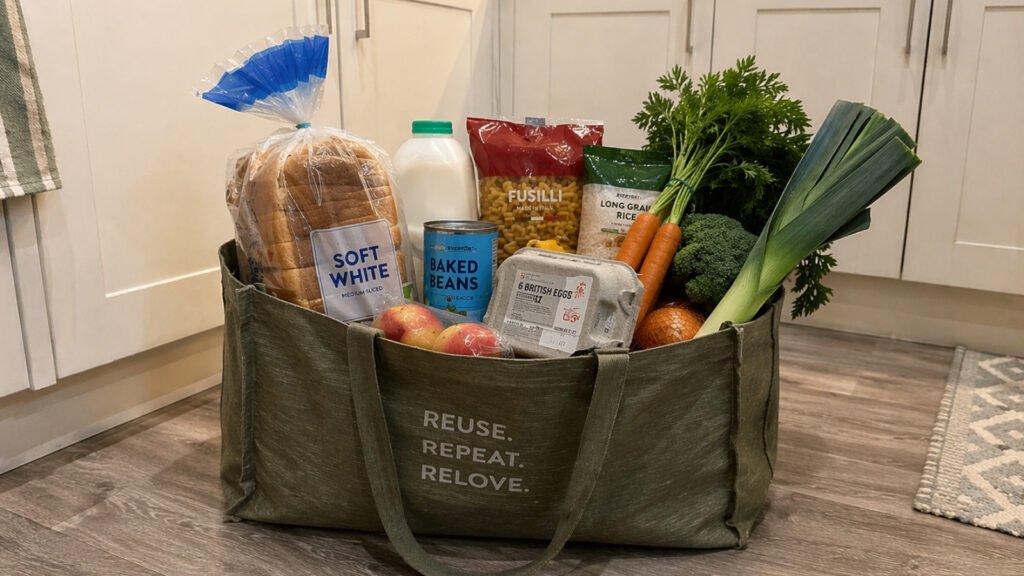
If you’re not sure what groceries you should buy each week when living alone, you’re not the only one.
You go to the supermarket, pick up a few things, and somehow end up with either too much food or nothing that turns into proper meals.
Knowing what to buy each week is one of the simplest ways to make cooking easier, reduce food waste, and keep your grocery bill under control.
This guide shows a simple, realistic way to plan your weekly groceries when you’re cooking for one person in the UK.
How Much Should One Person Buy Each Week?
One of the biggest challenges when grocery shopping for one person is knowing how much to buy.
It’s easy to either:
- Buy too much and waste food
- Buy too little and feel like you have nothing to eat
A simple approach is to aim for:
- 3–4 main meals for the week
- 1–2 simple “backup” meals
- A few flexible ingredients that can be reused
This usually gives you enough variety without creating waste.
A simple weekly grocery list for one person can make cooking much easier.
Why Grocery Shopping Feels Harder When You Live Alone
Most supermarkets are designed for families.
That means:
- Pack sizes are often too large.
- Multi-buy offers encourage overbuying.
- Recipes are written for multiple servings.
When you shop for one person, it’s easy to end up with:
- Too many ingredients
- Food is going to waste
- Meals that don’t quite come together
If this sounds familiar, you may also find it helpful to understand why you keep buying too much food when you live alone.
A Simple Way to Think About Your Weekly Groceries
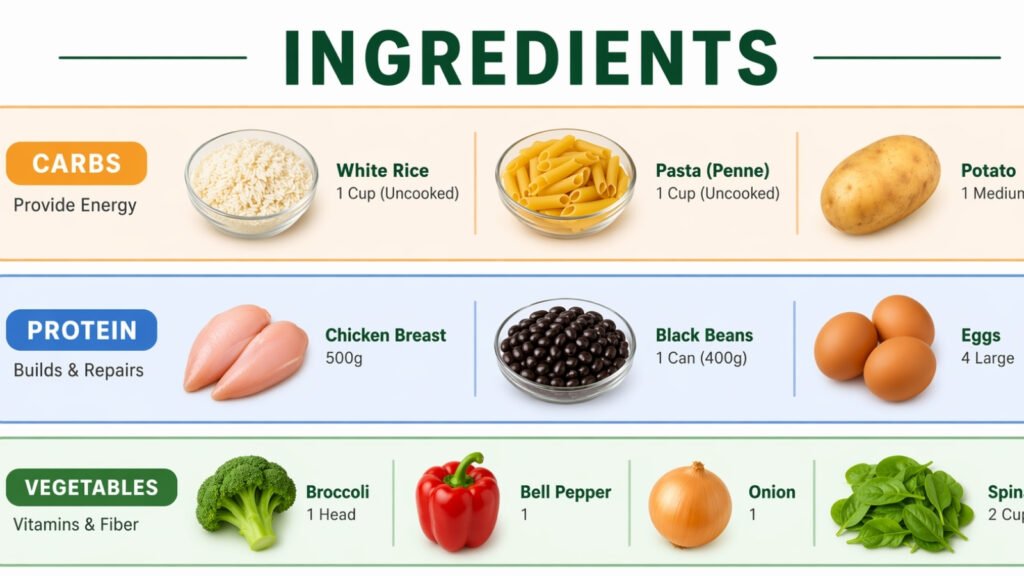
Instead of trying to plan every meal perfectly, it helps to keep things simple.
Think in categories rather than recipes.
Each week, aim to buy a small amount from each of these groups:
Carbs (Base of Your Meals)
Choose 1–2:
- Rice
- Pasta
- Potatoes
- Bread
- Oats
These form the base of most cheap, filling meals.
Protein (Keeps Meals Filling)
Choose 2–3:
- Eggs
- Chicken
- Tinned tuna
- Beans or lentils
- Cheese
These help turn basic ingredients into satisfying meals.
Vegetables (Fresh or Frozen)
Choose 2–4:
- Frozen mixed vegetables
- Carrots
- Onions
- Peppers
- Broccoli
Frozen vegetables are often easier when living alone because they last longer.
Extras (Flavour + Variety)
Choose a few:
- Tinned tomatoes
- Pasta sauce
- Curry paste
- Soy sauce
- Garlic or spices
These turn simple ingredients into proper meals.
Example Weekly Grocery List for One Person UK
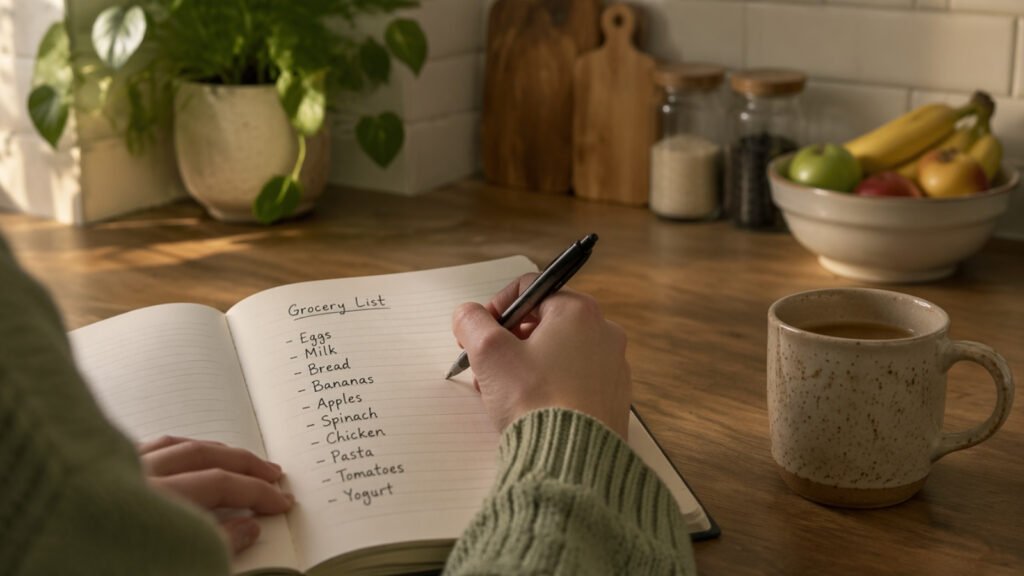
Here’s a simple example of what one week might look like:
- Rice
- Pasta
- Eggs
- Chicken (or vegetarian alternative)
- Tinned tuna
- Frozen vegetables
- Onions
- Tinned tomatoes
- Bread
- Cheese
This list can be used to create several meals without needing lots of extra ingredients.
A simple weekly grocery list for one person can make cooking much easier.
If you want more ideas, see cheap meals for one person, which shows how to turn simple ingredients into meals.
How to Adjust This List for Your Week
Your grocery list doesn’t need to look the same every week.
You can adjust it based on:
- What you already have at home
- What meals you feel like eating
- Your budget for the week
For example:
- If you already have rice, you might buy potatoes instead
- If you don’t feel like cooking much, you might choose simpler meals
- If your budget is tighter, you might rely more on eggs, beans, and frozen vegetables
Flexibility is what makes this approach sustainable.
What Meals Can This Turn Into?

With a simple list like this, you can make:
- Egg fried rice
- Pasta with tomato sauce
- Chicken and vegetable stir-fry
- Tuna pasta
- Omelettes
- Jacket potatoes with toppings
You don’t need a different meal every day — repeating meals helps reduce waste and simplify cooking.
A Simple 3-Day Meal Example Using One Shop
To show how this works in practice, here’s a simple example using basic ingredients:
Day 1
Chicken and vegetable stir-fry with rice
Day 2
Pasta with tomato sauce and vegetables
Day 3
Egg fried rice using leftover rice and vegetables
In this example:
- The same ingredients are used across multiple meals
- Nothing is wasted
- Cooking stays simple
This approach works well when you live alone because it reduces both cost and effort.
How to Keep Your Grocery Shopping Simple
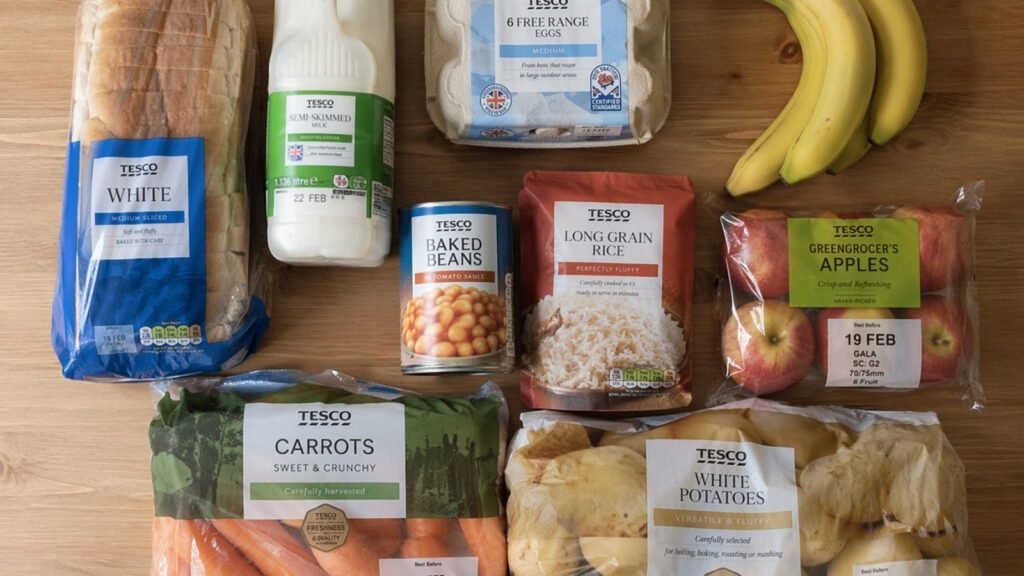
A few small habits can make a big difference:
Plan Fewer Meals
Instead of planning seven different meals, choose 3–4 and repeat them during the week.
Shop Once Per Week
This helps avoid extra purchases and keeps your spending more predictable.
Check What You Already Have
Before shopping, take a quick look in your fridge, freezer, and cupboards.
This helps prevent buying duplicates.
Keep a Few “Backup” Meals
Simple meals like eggs on toast or pasta can help on days when plans change.
If you often struggle with this, see what to cook when you have nothing in the house.
What you buy will also depend on your shopping routine. I usually find it helps to decide how often you need to grocery shop when you live alone before planning quantities for the week.
Common Grocery Shopping Mistakes When Living Alone
A few habits can make shopping more expensive or stressful:
- Buying ingredients for one meal only
- Trying to cook something different every day
- Shopping multiple times per week
- Buying too much fresh food at once
- Forgetting what you already have
Keeping things simple usually works better.
How to Store Your Groceries So They Last Longer
Buying the right food is only part of the process — storing it properly also matters.
A few simple habits can help:
- Keep vegetables in the correct fridge drawer
- Store leftovers in clear containers
- Freeze food you won’t use in time
- Keep older items at the front
This helps you see what you have and use it before it goes to waste.
If you want a simple system, see how to store food when you live alone.
How This Fits Into a Simple Meal System
Your weekly grocery shop doesn’t need to be perfect.
It just needs to support a simple routine.
For example:
- Plan 3–4 meals
- Use ingredients across multiple dishes.
- Freeze extra portions if needed.
- Keep meals flexible
If you want a full step-by-step approach, see meal planning for one person in the UK.
Combine This With Simple Meal Ideas
Knowing what to buy becomes much easier when you also know what you can cook.
You might find these helpful:
- Cheap meals for one person
- What to cook when you have nothing in the house
- A gentle guide to batch cooking for one
These guides help turn basic ingredients into simple meals.
A Flexible Approach Works Best
There’s no single “perfect” grocery list.
Your list will change depending on:
- What you enjoy eating
- What you already have
- Your weekly routine
The goal is not perfection — it’s simplicity.
What If You Still Get It Wrong?
Even with a plan, some weeks won’t go perfectly.
You might:
- Buy too much
- Forget ingredients
- Change your mind about meals
This is completely normal.
The goal isn’t to get your shopping perfect every week — it’s to improve gradually and make things easier over time.
Final Thoughts
Knowing what to buy each week becomes much easier when you stop trying to plan everything in detail.
By choosing a few basic ingredients, repeating meals, and keeping things flexible, you can make grocery shopping simpler, cheaper, and far less stressful.
Small habits make a big difference over time.