
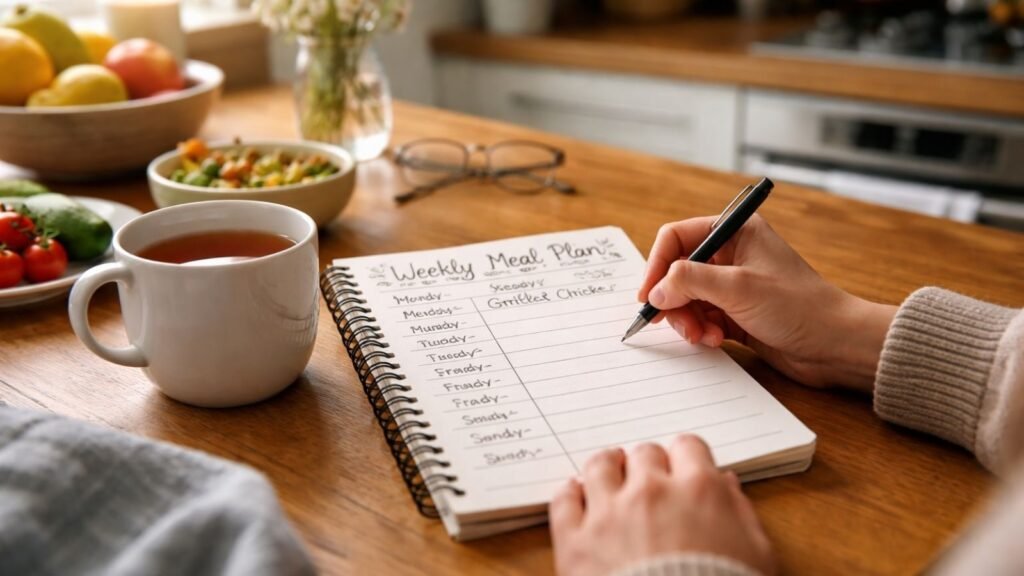
Meal planning can make cooking easier, reduce food waste, and help control grocery spending. However, most meal planning advice assumes you are cooking for a family or several people.
When you live alone, meal planning works a little differently.
Recipes often make too much food, supermarket ingredients come in fixed pack sizes, and cooking a completely new meal every day can feel unnecessary. As a result, many people living alone either stop planning meals altogether or fall into repetitive eating habits.
The good news is that meal planning for one person doesn’t need to be complicated. With a simple weekly structure, you can cook a few meals each week, use leftovers efficiently, and still enjoy variety.
If you’re building a system for cooking when living alone, this guide will help you create a simple weekly plan that complements the strategies outlined in the Meal Planning for One Person (UK Guide).
Why Meal Planning for One Person Is Different
Meal planning for a single household differs from planning for a family.
When several people share meals, cooking larger recipes and planning daily dinners makes sense. But when you live alone, preparing a fresh meal every evening often results in unnecessary work and wasted food.
A few key factors change how meal planning works for one person.
Recipes produce multiple portions.
Most recipes are written for two to four people. Cooking a full recipe often yields several servings, so leftovers are common.
Instead of seeing this as a problem, it’s usually easier to plan meals that intentionally include leftovers.
Supermarket ingredients come in fixed pack sizes.
Many foods are sold in quantities that naturally produce multiple meals. For example:
- packs of chicken breasts
- bags of vegetables
- 500g packs of mince
Planning meals that reuse these ingredients across several days helps reduce waste and keep costs down.
Cooking every day isn’t necessary.
Many people assume they should cook dinner every evening. In reality, most solo households cook only a few times per week and rely on leftovers or simple meals on other days.
If you’re unsure how often cooking is actually necessary, see How Many Meals Should One Person Cook Per Week.
Start with a Simple Weekly Structure
The easiest way to plan meals for one person is to create a simple weekly rhythm.
Instead of planning seven completely different dinners, many people find it easier to cook three or four meals and reuse leftovers.
A simple weekly structure might look like this:
Monday – cook a meal
Tuesday – eat leftovers or a variation
Wednesday – cook a meal
Thursday – eat leftovers
Friday – cook a meal
Weekend – simple meals or freezer meals
This type of routine keeps cooking manageable while still providing variety.
You don’t need to follow a rigid weekly schedule. The goal is simply to reduce the number of meals that need to be prepared from scratch.
Choose 3–4 Core Dinners
Once you have a weekly structure, the next step is to choose a few dinners for the week.
Planning fewer dinners usually makes meal planning much easier.
For example, you might choose:
- a stir fry
- a pasta dish
- a tray bake
- a soup or stew
Each of these meals can yield 2 or 3 portions, so leftovers can be used later in the week.
Simple meals often work best when cooking for one person. If you need ideas, see Easy Dinners for One Person, which includes meals that are easy to cook in smaller portions.
A simple weekly grocery list can make meal planning much easier — see what groceries you should buy each week.
Plan Lunches and Simple Meals
Lunches don’t usually require the same level of planning as dinners.
Many people living alone simply use leftovers from dinner for lunch the next day. This saves time and helps reduce food waste.
Other simple lunch options include:
- sandwiches
- soups
- eggs on toast
- wraps
- salads
Keeping lunch simple also makes meal planning less overwhelming.
If you’re looking for ideas, see Cheap Healthy Lunch Ideas for One, which includes several practical lunch options.

Use Ingredients Across Multiple Meals
One of the most useful habits when meal planning for one person is learning to reuse ingredients across several meals.
Buying completely different ingredients for every meal often leads to higher grocery bills and food waste.
Instead, many meals can share similar ingredients.
For example, a small shopping list might include:
- chicken breast
- peppers
- onion
- pasta
- rice
- eggs
From these ingredients, you could create several meals during the week, such as:
- chicken stir fry
- chicken pasta
- egg fried rice
- chicken wraps
Using ingredients this way helps reduce waste and makes grocery shopping more efficient.
Use the Freezer to Create Variety
Freezer meals can also make weekly meal planning much easier.
Whenever you cook a meal that yields several portions, consider freezing one portion rather than eating it immediately.
Over time, this builds a small collection of freezer meals for busy days.
For example, you might gradually build a freezer rotation that includes:
- chilli
- curry
- soup
- pasta sauce
This allows you to include a freezer meal occasionally without having to cook again.
If you want more ideas, see Best Freezer Meals for One Person, which includes meals that freeze well in small portions.
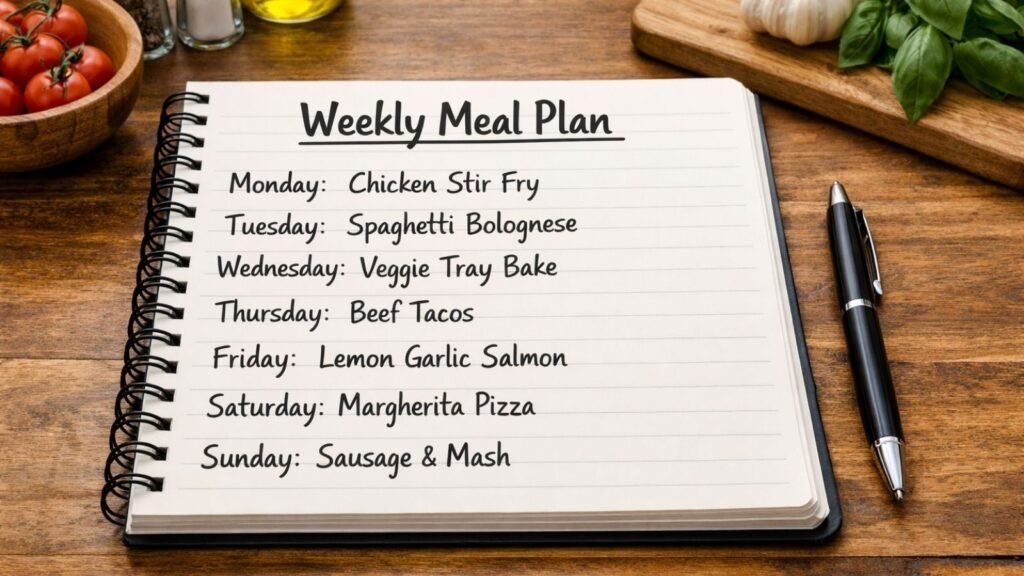
Example Weekly Meal Plan for One Person
To show how this approach works in practice, here is an example weekly meal plan.
Monday
Chicken stir fry with rice
Tuesday
Chicken stir fry wraps
Wednesday
Tomato pasta
Thursday
Tomato pasta leftovers
Friday
Tray-baked vegetables and sausage
Saturday
Freezer meal
Sunday
A simple meal, such as eggs on toast
In this example, only three meals were cooked during the week, yet they still varied enough to avoid repetition.
This approach reduces cooking time while keeping meals practical and affordable.
Meal Planning for One Doesn’t Need to Be Complicated
Meal planning for one person is often simpler than it first appears.
Instead of planning a different meal every day, many solo households find it easier to cook three or four meals per week and use leftovers, simple lunches, and occasional freezer meals to fill the rest of the week.
Over time, this creates a routine that makes grocery shopping easier, reduces food waste, and keeps cooking manageable.
If you’re looking for simple ideas to fill your plan, see easy weekly meal ideas for one person.
If you want to build a full system around this approach, the complete framework is explained in the Meal Planning for One Person (UK Guide).