
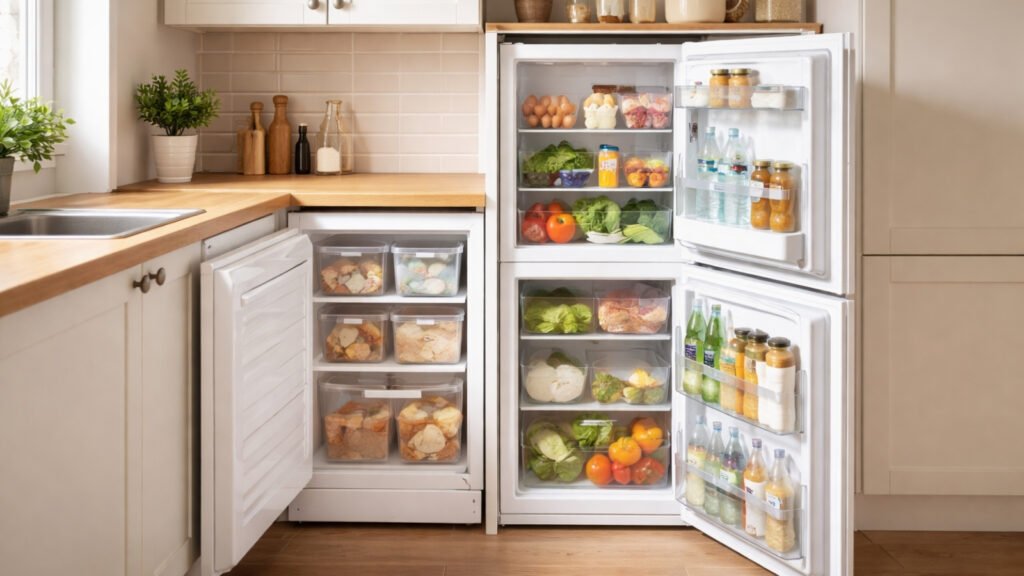
Knowing how to store food when you live alone can make a big difference to how much you waste and how easy cooking feels day to day.
Things get pushed to the back of the fridge.
Leftovers are forgotten.
Fresh food goes off faster than expected.
Before long, you’re wasting food and spending more than you need to.
The good news is that storing food properly doesn’t have to be complicated.
With a few simple habits, you can keep your fridge and freezer organised, reduce waste, and make everyday cooking much easier.
Why Food Storage Matters When You Live Alone
When you’re cooking for one, small inefficiencies add up quickly.
Good storage helps you:
- Waste less food
- Save money
- Make meal planning easier.
- Avoid unnecessary shopping trips.
It also makes your kitchen feel calmer and more manageable.
Starting with the right shopping list makes storage much easier (see a budget grocery list for one person).
A Simple System for Storing Food
You don’t need a perfect setup — just a simple system that works day to day.
Think in three parts:
- Fridge → short-term storage (next 2–3 days)
- Freezer → longer-term storage (weeks to months)
- “Use first” area → anything that needs eating soon.
This keeps things clear and easy to manage.
What Should You Store in the Fridge vs Freezer?
A simple way to decide:
Fridge (short-term):
- Cooked meals you’ll eat within 2–3 days
- Dairy (milk, yoghurt, cheese)
- Fresh vegetables
- Open jars and sauces
Freezer (long-term):
- Batch-cooked meals
- Bread
- Cooked rice or pasta
- Meat you won’t use immediately
When in doubt, freezing food is often better than letting it go to waste.
How to Organise Your Fridge (For One Person)
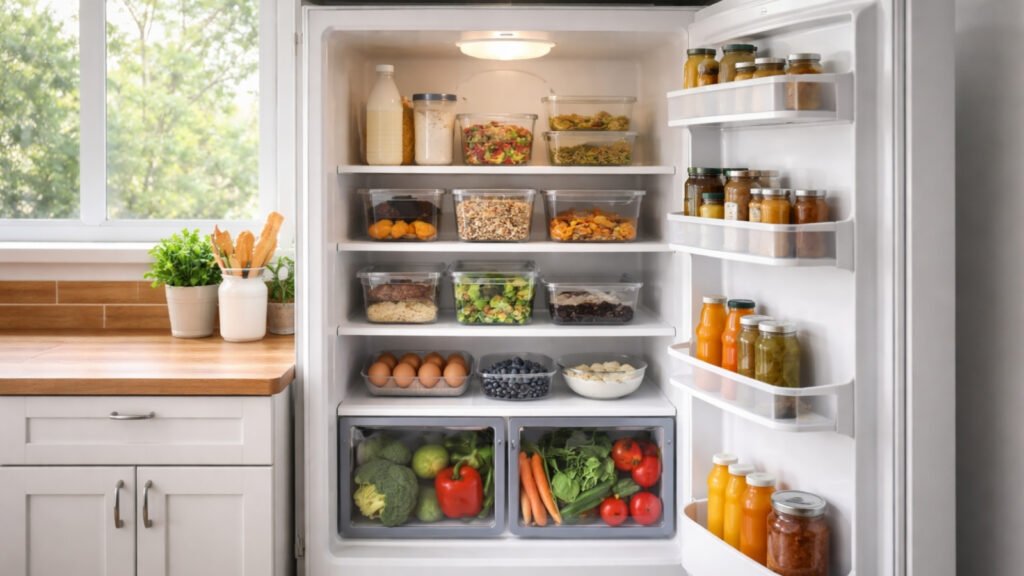
Your fridge works best when everything is visible and easy to find.
A simple layout:
- Top shelf: leftovers and ready-to-eat meals
- Middle shelf: daily items (milk, yoghurt, cheese)
- Drawer: fruit and vegetables
- Door: sauces and condiments
If you want a more detailed walkthrough, see my guide to organising your fridge when you live alone.
How to Use Your Freezer Properly When Living Alone
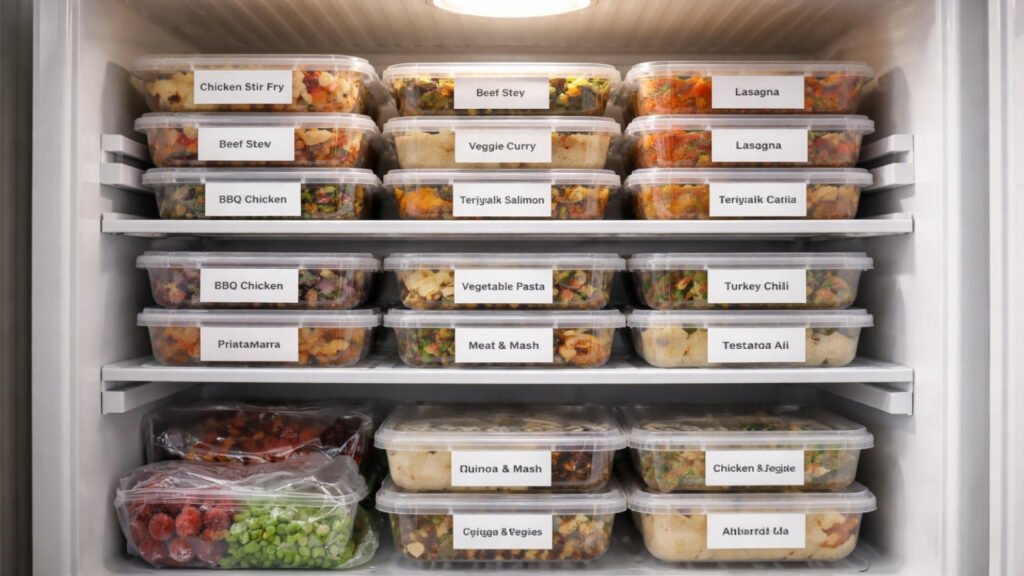
The freezer is one of the most useful tools when cooking for one.
It allows you to:
- Save leftovers
- Batch cook meals
- Avoid food going to waste
A simple approach:
- Freeze meals in single portions.
- Label with name and date.
- Keep similar meals together.
Using the right containers makes this much easier, especially when storing individual portions. You can browse practical options on Amazon UK if you’re setting this up.
If you’re new to freezing meals, it helps to follow a simple system so nothing gets wasted (see how to freeze meals for one person).
If you want a clearer idea of what works best, see my guide to freezer containers for one person.
How to Store Leftovers (Without Forgetting Them)
Leftovers are one of the biggest sources of waste when you live alone.
A few simple habits help:
- Store leftovers in clear containers.
- Keep them at the front of the fridge.
- Use an “eat me first” area.
- Freeze anything you won’t eat within a couple of days.
If you want a more detailed guide, see how to store leftovers when you live alone.
How Long Does Food Last in the Fridge?
As a simple guide:
- Cooked meals: 2–3 days
- Opened dairy: check label, usually a few days
- Cooked rice: up to 2 days
- Fresh vegetables: varies (3–7 days typical)
If you’re unsure, it’s safer to freeze food earlier rather than later.
How Storage Supports Meal Planning
Food storage and meal planning go hand in hand.
When your food is organised:
- You know what you already have.
- You avoid buying duplicates.
- You can plan meals more easily.
- You waste less
If you want to build a simple routine around this, you can explore meal plans for one person in the UK.
Example: A Simple Storage Setup for One Person
A typical setup might look like:
- 2–3 meals in the fridge for the next couple of days
- 3–5 portions in the freezer
- A small “use first” section for leftovers
This keeps things manageable without overfilling your fridge or freezer.
A Simple Weekly Routine
You don’t need to do much to stay organised.
Try this:
Once a week:
- Quick fridge check
- Throw away anything that has expired.
- Plan 2–3 meals
- Cook once or twice
- Freeze a few portions.
That’s enough to keep things running smoothly.
Common Food Storage Mistakes
A few small habits can cause most problems:
- Overfilling the fridge
- Forgetting leftovers
- Not freezing food in time.
- Using containers you can’t see into
Keeping things simple usually works best.
Final Thoughts
Storing food properly when you live alone isn’t about being perfect.
It’s about creating a simple system that makes everyday life easier.
Start small:
- Keep food visible
- Use your freezer
- Build a routine
Over time, these small habits make a big difference.
If you’d like a complete step-by-step approach to organising your food, shopping, and meals, see my full guide to meal planning for one person in the UK.