
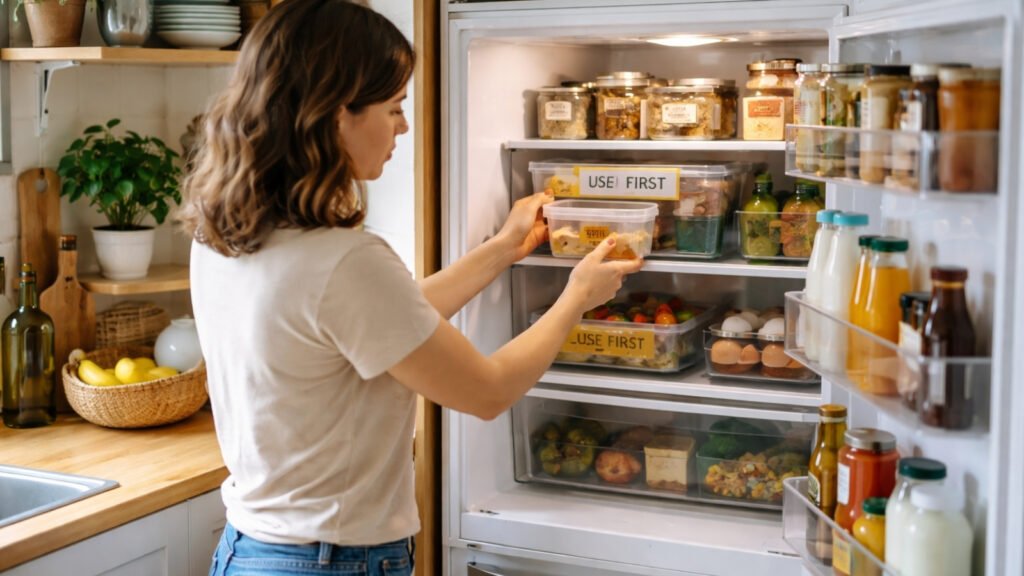
Knowing how to store leftovers when you live alone can make a big difference to how much food you waste and how easy meals feel day to day.
A meal you planned to eat tomorrow gets forgotten.
Something gets pushed to the back of the fridge.
Soon, it ends up in the bin.
The good news is that storing leftovers properly doesn’t take much effort.
A few habits keep leftovers visible, safe, and easy to use.
Why Leftovers Matter When You Live Alone
Leftovers are one of the easiest ways to:
- Save money
- Reduce food waste
- Avoid cooking every day.
- Make meal planning simpler.
But only if you actually use them.
The goal isn’t to store more food—just to make it easy to eat later.
A Simple System for Storing Leftovers
No need for anything fancy.
A basic system works best:
- Keep leftovers visible
- Store in single portions
- Decide when you’ll eat them.
- Freeze anything you won’t use within a couple of days.
This keeps things simple and cuts waste.
Use the Fridge for Short-Term Storage
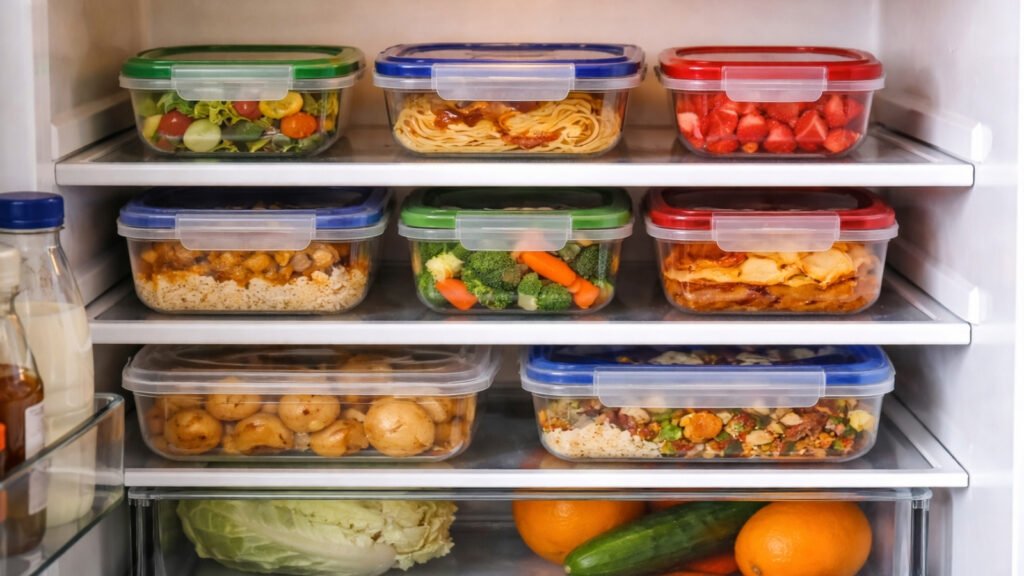
Your fridge is best for meals you’ll eat soon.
As a general guide:
- Eat leftovers within 2–3 days.
- Put them at the front of the fridge.
- Keep similar items together.
Creating a small “use first” area can help you remember what needs to be eaten.
If you want a more comprehensive system for organising your fridge, see my guide to organising your fridge when you live alone.
Use the Freezer for Longer Storage When Living Alone
If you won’t eat something within a couple of days, freeze it.
This works well for:
- Soups
- Stews
- Curries
- Pasta sauces
- Cooked meat dishes
Freezing leftovers gives you easy meals for later without extra effort.
Properly freezing leftovers makes a big difference when you’re cooking for one (see how to freeze meals for one person).
Store Leftovers in Single Portions
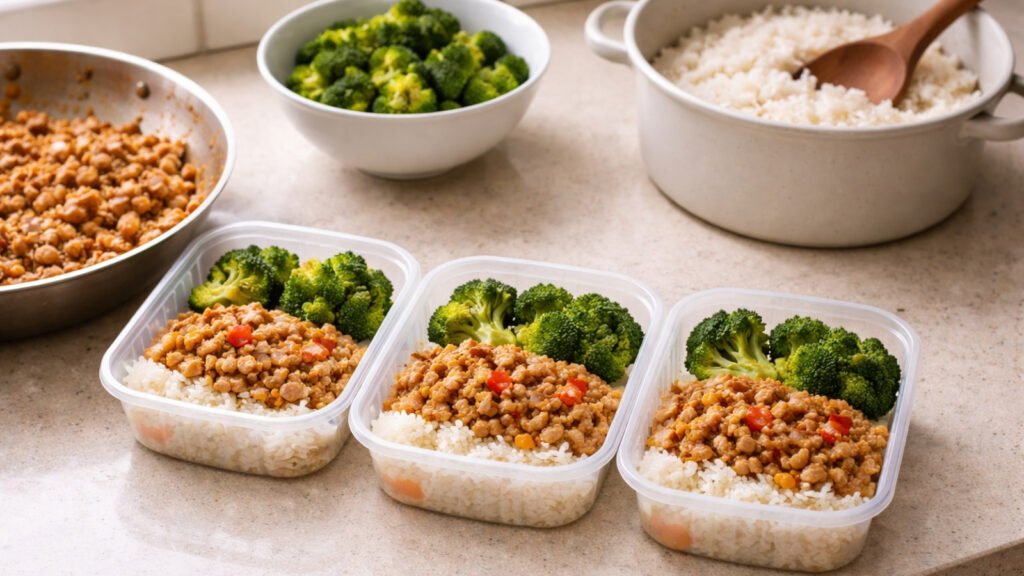
This is one of the most helpful habits when cooking for one.
Instead of storing a large batch:
- Divide meals into individual portions.
- Store each in a separate container.
This makes it easier to:
- Reheat just what you need
- Avoid wasting food
- Keep meals flexible
Using simple, stackable containers makes this much easier. You can browse practical options on Amazon UK if you’re setting this up.
If you want more guidance, see my guide to freezer containers for one person.
Label Meals (Even Simply)
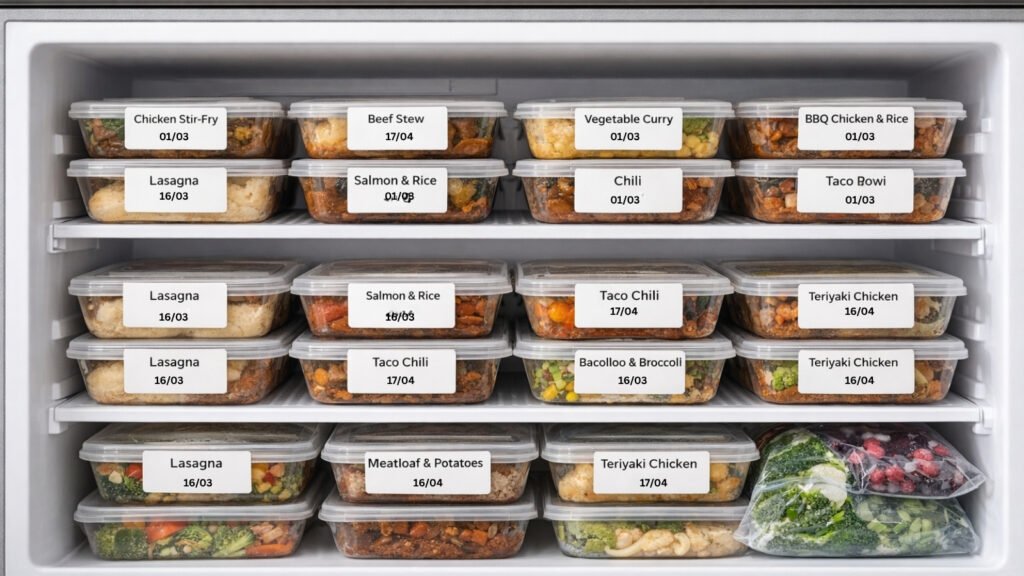
Don’t overthink labelling.
A small label can include:
- Meal name
- Date
Example:
“Chilli – Monday”
This avoids the “mystery container” problem and helps you use food before it spoils.
Keep Leftovers Visible
Out of sight means out of mind.
A few simple ideas:
- Use clear containers
- Keep leftovers at eye level.
- Avoid stacking too deeply.
- Check your fridge regularly.
The easier it is to see, the more likely you are to use it.
Plan Leftovers Into Your Week
Leftovers work best when they’re part of your plan.
For example:
- Cook once → eat twice.
- Eat one portion today, one tomorrow.
- Freeze one for later.
This turns leftovers into a useful system rather than an afterthought.
If you’d like to see how this fits into a full weekly routine, you can explore meal plans for one person in the UK.
Common Mistakes with Leftovers
A few small habits can lead to most waste:
- Storing food in large containers
- Forgetting what’s in the fridge
- Not freezing food soon enough.
- Overcooking without a plan
Keeping things simple usually works best.
Example: A Simple Leftover Routine
A typical approach might look like:
- Cook 2–3 portions
- Eat one immediately
- Store one in the fridge.
- Freeze one
This gives flexibility without clutter.
Final Thoughts
Leftovers don’t need to feel like a problem.
With a simple system, they can:
- Save time
- Reduce waste
- Make everyday cooking easier.
Start small:
- Store in portions
- Keep things visible
- Use your freezer
Soon, these habits become second nature.
If you’d like a complete system for organising your fridge, freezer, and meals, see my guide on how to store food when you live alone.
And if you want a step-by-step routine for planning meals and using what you have, my complete guide to meal planning for one person walks through everything simply.