
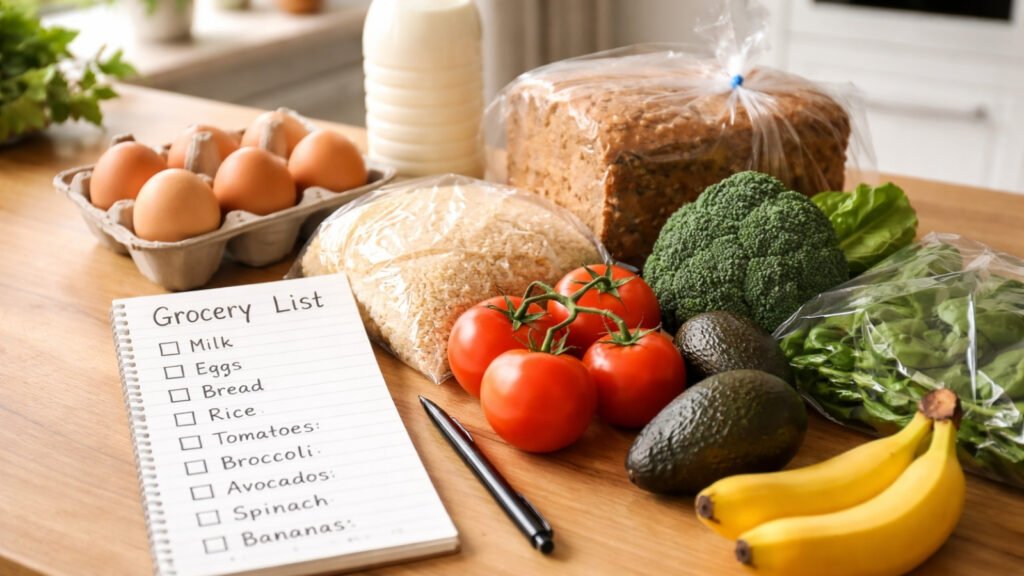
Creating a cheap grocery list for one person in the UK can feel surprisingly difficult at first.
Pack sizes are often designed for families, and it’s easy to end up buying more than you need, which leads to waste and higher weekly costs.
The good news is that a simple, structured grocery list can make a big difference.
This guide shows you what to buy, how to keep costs low, and how to shop in a way that actually works for one-person households.
What Makes a Grocery List Work for One Person
A good grocery list for one person focuses on:
- Ingredients that can be used across multiple meals
- Foods that store well
- Simple, flexible meals
- Minimising waste
The goal isn’t variety for the sake of it — it’s practicality.
A Simple Cheap Grocery List (UK Example)
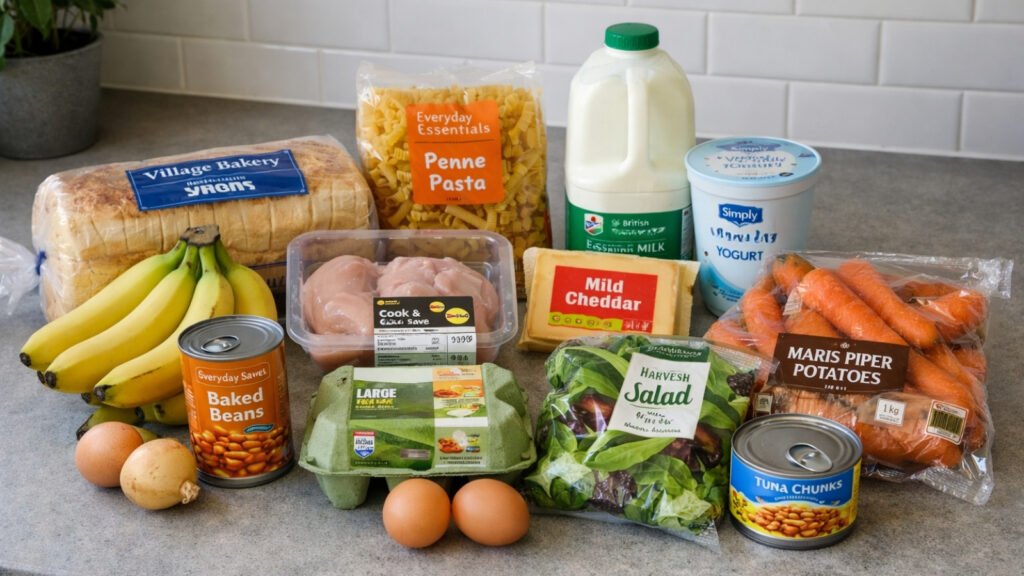
This is a realistic weekly shop for one person using budget supermarkets such as Aldi or Lidl.
Protein
- Eggs (12 pack)
- Chicken thighs
- Tinned beans (chickpeas, kidney beans)
- Lentils
Carbohydrates
- Rice (1kg)
- Pasta (500g)
- Potatoes (2kg)
- Bread or wraps
Vegetables
- Frozen mixed vegetables
- Onions
- Carrots
- Peppers
- Broccoli
Fruit
- Bananas
- Apples
Dairy & Extras
- Milk
- Cheese
- Yoghurt
- Tinned tomatoes
- Basic sauces or spices
This kind of shop usually costs around £25–£30, depending on location and brand choices.
How to Keep This Grocery List Cheap
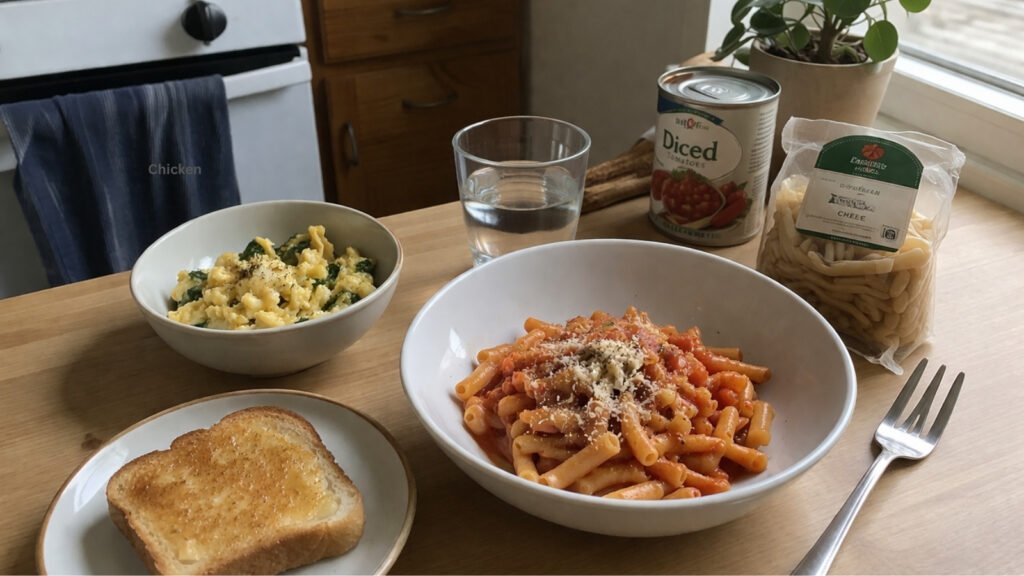
A few simple habits make the biggest difference.
1. Repeat Ingredients Across Meals
Use the same ingredients in multiple dishes.
For example:
- Rice for curry, chilli, and fried rice
- Chickpeas for curry and salads
This reduces waste and lowers costs.
2. Use Frozen Vegetables
Frozen vegetables are often cheaper and last longer than fresh ones.
They also help you avoid throwing food away.
3. Choose Own-Brand Products
For staple items like rice, pasta, and tinned goods, own-brand products are usually just as good but cost less.
4. Avoid Multi-Buy Offers
Deals like “3 for £5” can increase spending if you don’t need all three items.
Buying only what you need is often cheaper.
5. Plan Before You Shop
Even a simple plan helps you avoid unnecessary purchases.
For a calmer, step-by-step way to shop each week, see my guide to grocery shopping for one person.
If you want to see how this list turns into actual meals, you can explore meal plans for one person in the UK.
How This Fits Into a Weekly Routine
A simple approach:
- Choose 2–3 meals
- Shop once
- Cook once or twice
- Repeat meals where needed
- Freeze extra portions
This keeps things manageable and reduces the number of daily decisions.
If you want a step-by-step system, see my guide on how to cut your grocery bill quickly when living alone.
Reducing Waste With a Simple Storage System
Buying the right food is only part of the process.
Properly storing it keeps costs low.
- Keep food visible
- Use leftovers quickly
- Freeze extra portions
If you want a complete system, see how to store food when you live alone.
Common Grocery Mistakes When Living Alone
A few habits can quickly increase your weekly bill:
- Buying too much fresh food
- Not planning meals
- Shopping multiple times per week
- Relying on convenience food
Keeping your list simple usually avoids all of these.
Final Thoughts
A cheap grocery list for one person doesn’t need to be restrictive.
It just needs to be practical.
By focusing on simple ingredients, repeating meals, and storing food properly, you can keep your weekly shop affordable without overthinking it.
If you want to build this into a full routine, start with the complete guide to meal planning for one person in the UK.